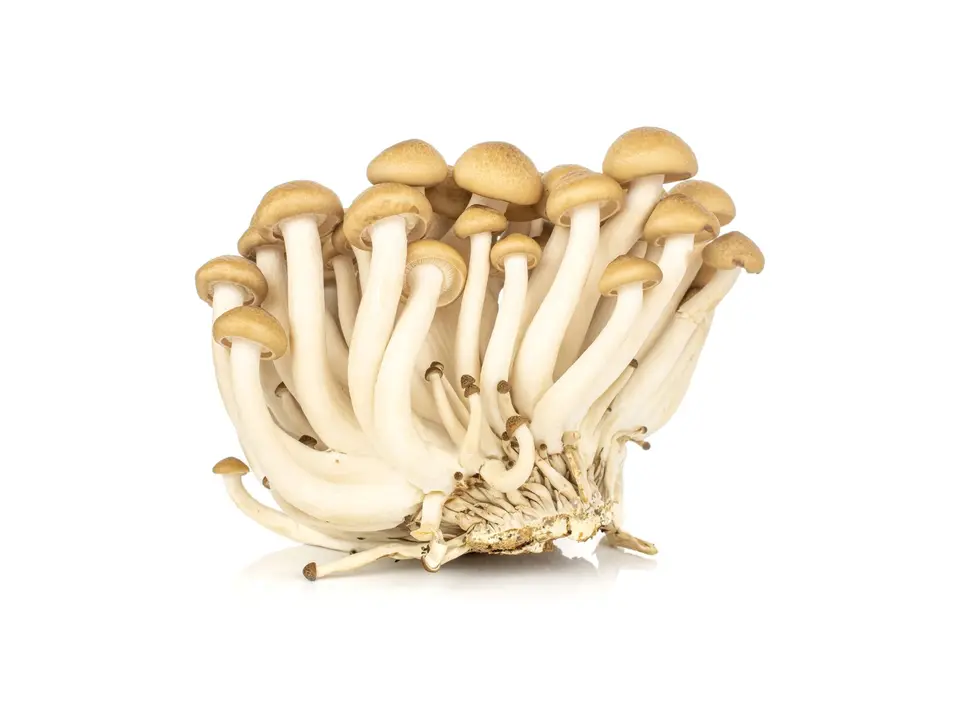
Shimeji mushroom.
Small white and brown caps on one base, firm and nutty when cooked
Coming soon
- Storage
- Keep shimeji in the fridge in its pack or a paper bag, and trim the base only just before cooking.
- Keeps
- Best within a few days
- Season
- All year, supply varies
- Origin
- Thailand
- Organic
- Certificate shown for each lot
Shimeji grows in clumps: dozens of slim stems rising from one shared base, each with a small round cap. There are two common kinds. The brown one has a light brown cap, often with fine darker marbling, and the white one is creamy white from cap to stem. Both taste much the same, gently nutty and savoury, and both stay firm with a slight crunch after cooking.
Raw shimeji can taste a little bitter, so it's a mushroom for the pan or the pot. Once cooked, the bitterness goes and the nutty side comes out. A mix of white and brown looks good in the same dish.
Ways to use it
- Cut off the base, pull the stems apart and fry them in butter with garlic and a pinch of salt.
- Add to miso soup, clear soup or hot pot for the last few minutes.
- Stir fry with mixed vegetables and a little soy sauce or oyster sauce.
- Toss into pasta or fried rice once the other ingredients are nearly done.
- Bake in a foil parcel with butter, soy sauce and a few slices of spring onion.
Storing it
Keep it in the fridge, in its own pack or a paper bag that lets moisture out. Leave the clump whole until you cook, then trim the base, rinse briefly if needed and pat dry. Use within a few days, before the caps turn soft or wet.
Where it comes from
Grown to certified organic standards. The certificate for each lot is shown when you trace your pack.
Every pack will carry a lot code. Enter it on the Trace your pack page and you will see the farms in that lot, the harvest date and the certificate.
What's inside
No figures yet: this food is not in the official food tables (Thai Food Composition Database of Mahidol University, and USDA FoodData Central).
Good to know.
All guides- Washing vegetables at homeWhat Thai FDA and the Department of Medical Sciences say about washing vegetables, and what washing can and can't remove.
- Organising the fridge so food stays safeKeep the fridge below 5 degrees C, put raw food in containers on the bottom shelf, and leave room for air to move. Advice from WHO and a US extension service.
- Wasting less food at homeHouseholds throw away most of the world's wasted food. Planning, using older food first and finding a use for leftovers are the habits FAO and UNEP point to.
More mushrooms.
See all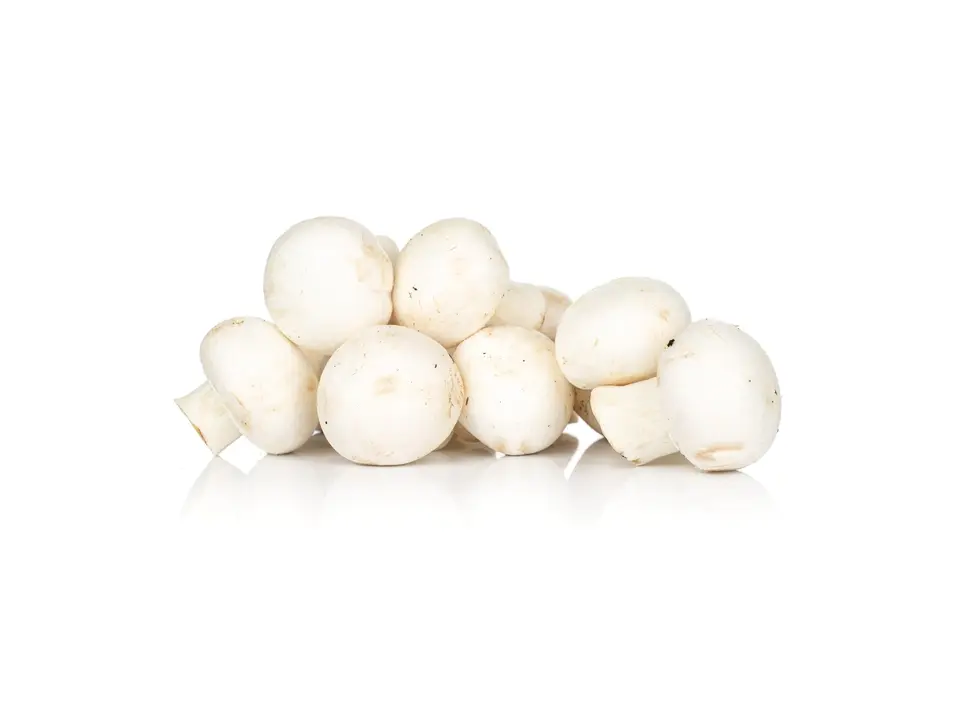 Coming soonMushroomsChampignonSmooth white button mushrooms for soups, sauces and salads
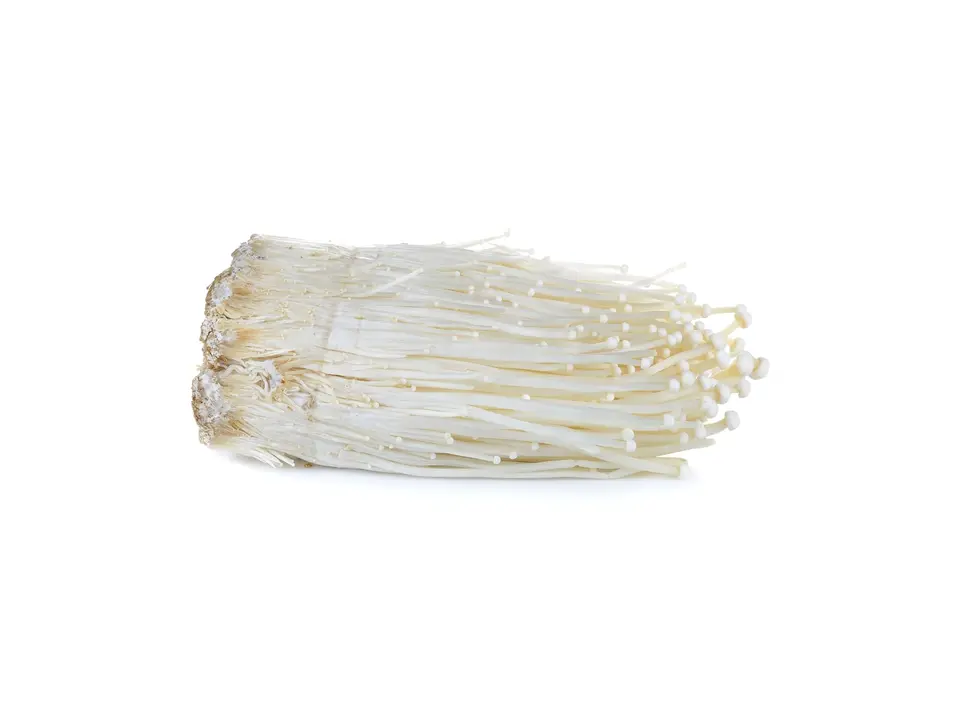 Coming soonMushroomsEnoki mushroomLong, thin white stems with tiny caps, for hot pot and soup
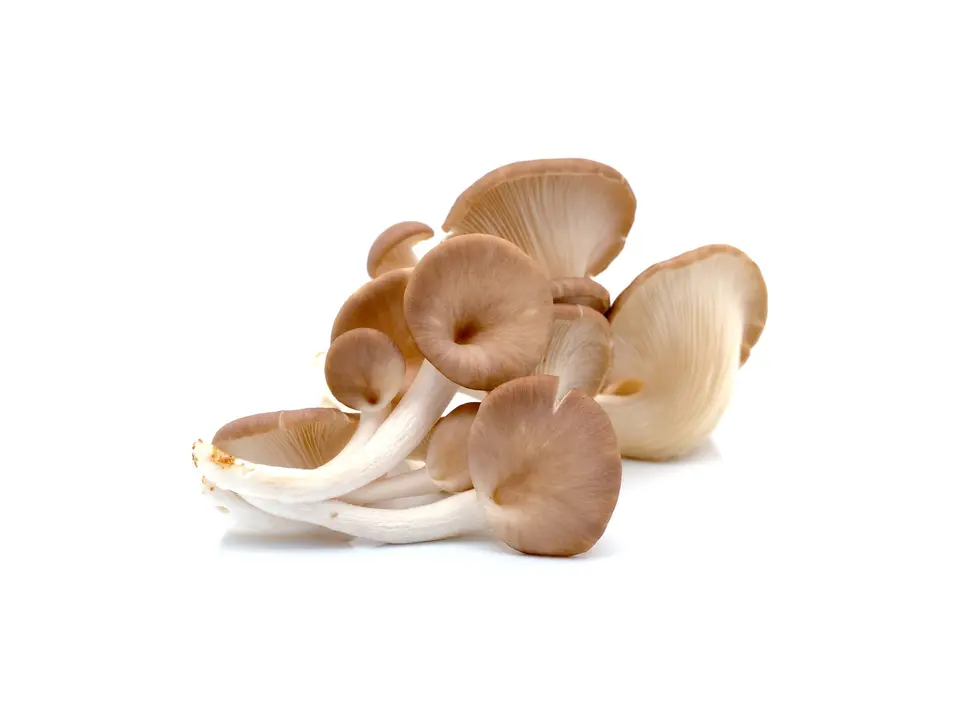 Coming soonMushroomsIndian oyster mushroomPale, tender fans for tom yum, stir fries and mushroom larb
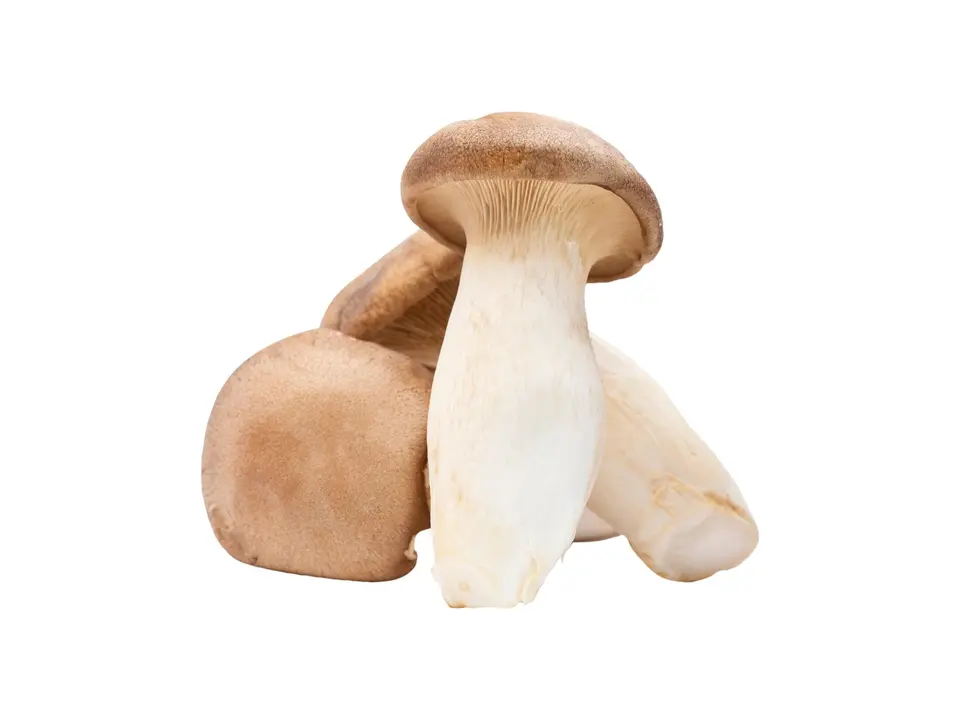 Coming soonMushroomsKing oyster mushroomThick, meaty stems that slice into rounds and brown well in the pan