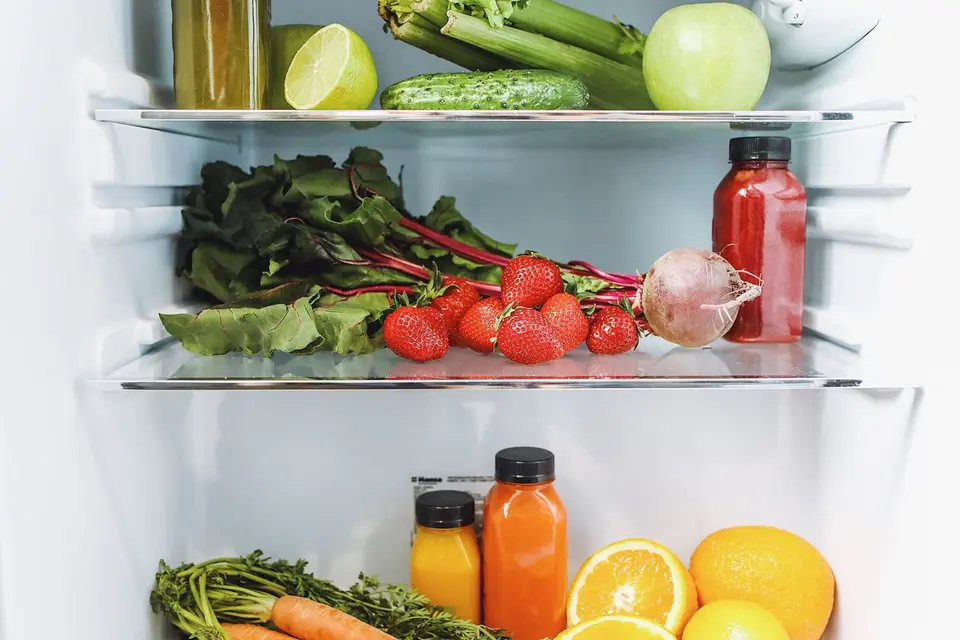
A safer fridge has three habits. It is cold enough, raw food sits below other food and in containers, and the shelves are not packed so tightly that air cannot move. The World Health Organization (WHO) says perishable food should be refrigerated promptly, preferably below 5 degrees C. A fridge thermometer is the way to check the real temperature.
The advice here comes from WHO, which applies worldwide, and from University of Illinois Extension in the United States. Each source is named where it is used.
The temperature
WHO's Five Keys to Safer Food say to refrigerate cooked and perishable food promptly, preferably below 5 degrees C. It also says not to leave cooked food at room temperature for more than 2 hours.
University of Illinois Extension gives a similar target in Fahrenheit, which it says is below 40 degrees F, about 4 degrees C. Its freezer figure is 0 degrees F or below, about minus 18 degrees C. It recommends a thermometer made for refrigerators and freezers rather than guessing. For a home check it suggests standing a glass thermometer in a glass of water in the middle of the fridge. After 5 to 8 hours, read it and adjust the dial until the reading is 38 to 40 degrees F, which is about 3 to 4 degrees C.
Which shelf for what
Raw meat, poultry and seafood go low. WHO says to separate raw meat, poultry and seafood from other foods, and to store food in containers so raw and prepared foods do not touch. Illinois Extension gives the reason for the bottom shelf: juices will not drip onto other foods and cause cross-contamination, meaning germs moving from one food to another.
Cooked and prepared food goes above. With raw meat on the bottom shelf, cooked dishes and other prepared food sit higher up, kept in containers as WHO advises. WHO also says to use separate knives and cutting boards for raw foods.
Fruit and vegetables go in the crisper. Illinois Extension says the crisper drawers are intended for fruits and vegetables.
The door is the warmest place. Illinois Extension says the door is often warmer and suits items that are high in sugar or acid, such as mustard, pickles, jellies and ketchup.
Room, timing and thawing
Do not overfill it. Illinois Extension says not to overcrowd the refrigerator, and to leave space for air to circulate. FAO advises moving older food to the front so it is used first, which is easier in a fridge that is not crammed.
Mind the time. WHO says not to store food too long even in the refrigerator. Illinois Extension gives examples of how long some foods keep:
- raw ground meat: 1 to 2 days
- fresh poultry: 1 to 2 days
- cooked meat: 3 to 4 days
- unopened lunch meat: 2 weeks
These are US examples for foods kept below 40 degrees F, so check the storage instruction and date on the pack for anything else.
Thaw in the fridge. WHO says not to thaw frozen food at room temperature.
In short
- Aim for below 5 degrees C, as WHO suggests, and check with a thermometer made for the fridge.
- Raw meat, poultry and seafood go on the bottom shelf, in containers, with cooked and ready-to-eat food above.
- The door is often the warmest spot. Illinois Extension suggests keeping sugary or acidic items there.
- Leave space for air to circulate, and move older food to the front.
- Do not leave cooked food out for more than 2 hours, and do not thaw frozen food on the counter.