Most food waste happens at home, and most of it comes from a few simple causes: bringing home more than the household eats, food going off before it is used, and leftovers that are forgotten. A few steady habits address each one. Plan the week, store food so the oldest is used first, and give leftovers a plan.
Why the home kitchen matters
The United Nations Environment Programme (UNEP) tracks food waste worldwide. Its Food Waste Index Report 2024 estimates that in 2022 the world wasted 1.05 billion tonnes of food. That is about one fifth, 19%, of the food available to consumers. Households were responsible for 631 million tonnes of it, which is 60%. UNEP puts the average at 79 kilograms of food wasted per person in a year.
The report also says that food waste is not only a problem of rich countries. Households in high-income, upper-middle-income and lower-middle-income countries differ by just 7 kilograms per person per year on average. UNEP adds that hotter countries appear to have more household food waste per person. It suggests two reasons: people eat more fresh foods with large inedible parts, and the cold chain, the unbroken chilled path from farm to home, is less robust. UNEP says higher temperatures make food harder to store safely. A warm Thai kitchen is a place where storage habits count.
Food loss and waste is also described by UNEP as generating 8 to 10% of global greenhouse gas emissions. The Food and Agriculture Organization (FAO) estimates a further 13% of the world's food is lost in the supply chain before the retail stage.
Plan ahead
FAO gives a short list of tips for households. Two of them concern planning what comes into the kitchen.
- Plan ahead. FAO advises planning meals, making a list and sticking to it.
- Do not judge food by its looks. FAO notes that oddly shaped or bruised fruit and vegetables are often thrown away, although there may be nothing wrong with them.
A practical way to follow both is to look in the fridge and cupboard before writing the list, then to plan the first meals around the produce that spoils fastest.
Store, use and keep
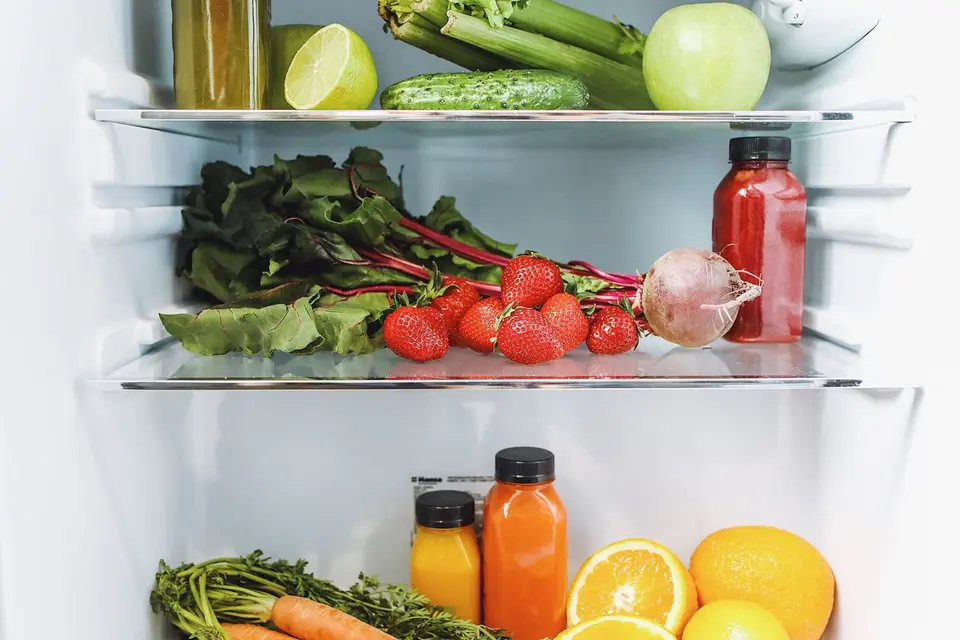
Oldest first. FAO's advice on storage is to move older products to the front of the cupboard or fridge and put new ones at the back. This is often called first in, first out.
Smaller portions. FAO suggests taking smaller portions at home.
Leftovers. FAO says leftovers can be frozen for later or used as an ingredient in another meal. The World Health Organization (WHO) gives the safety side of this. Do not leave cooked food at room temperature for more than 2 hours. Refrigerate cooked and perishable food promptly, preferably below 5 degrees C. Reheat cooked food thoroughly. WHO also says not to store food too long, even in the refrigerator, and not to thaw frozen food at room temperature.
Whole vegetables. Use all of the parts you already eat. Stems and outer leaves that are normally eaten can go into a soup or a stir-fry rather than the bin. For scraps that cannot be eaten, FAO lists composting as a way to return nutrients to the soil.
Date labels. FAO points out that "best before" and "use-by" dates differ. Under the Thai definition, "ควรบริโภคก่อน" marks the end of the best-quality period, and quality may change after it. The Thai rules for the words "ควรบริโภคก่อน" and "หมดอายุ" are explained in a separate article.
A weekly rhythm
A simple routine fits these tips together. Check what is already at home. Write a list for the meals planned. Put new food behind old. Use the soft or ripe items first. Keep one meal near the end of the week for leftovers and odds and ends.
In short
- Households were responsible for 631 million tonnes, or 60%, of the 1.05 billion tonnes of food wasted worldwide in 2022, according to UNEP.
- UNEP says hotter countries appear to have more household food waste, which makes storage habits important in a warm climate.
- FAO's advice: plan meals, keep to a list, move older food to the front, take smaller portions, and freeze or reuse leftovers.
- WHO's food safety advice for leftovers: refrigerate promptly, reheat thoroughly, and do not keep cooked food at room temperature for more than 2 hours.
- Misshapen or bruised produce is often discarded, and FAO asks households not to judge food by its looks.