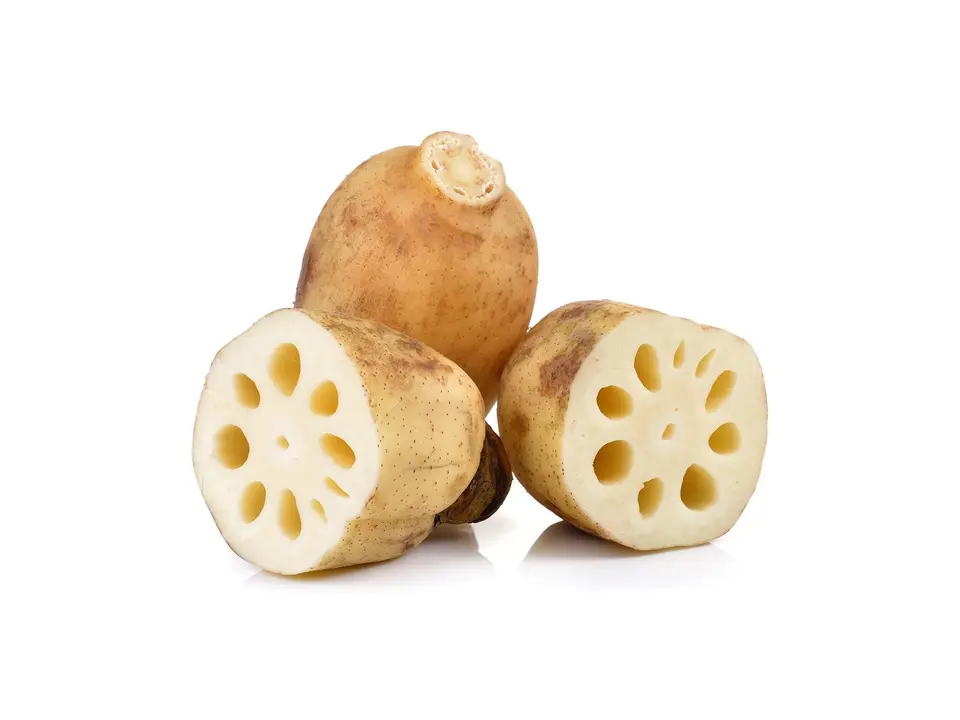
Lotus root.
Crunchy slices with a lace of holes, for soup and stir fries
Coming soon
- Storage
- Keep lotus root whole and wrapped in a bag in the fridge drawer, and wash and peel it just before use.
- Keeps
- Best within a few days
- Season
- All year, supply varies
- Origin
- Thailand
- Organic
- Certificate shown for each lot
Lotus root is the underwater stem of the lotus plant. It grows in long sausage-like links with a pale tan skin, and when you slice across it, each round shows a ring of holes like a little wheel. The flesh is crisp and juicy, a bit like water chestnut, with a mild, faintly sweet taste. A short cook keeps the crunch. A long simmer makes it tender and slightly starchy. In Thailand it shows up most in clear soups and in the sweet drink made from it.
Ways to use it
- Simmer thick slices with pork ribs in a clear soup until tender.
- Slice thin and stir fry quickly with garlic, chilli and a little oyster sauce, so it stays crunchy.
- Blanch thin slices for a minute and dress them with lime, fish sauce, chilli and herbs for a Thai yam salad.
- Fry thin slices in hot oil for crisp chips.
- Boil with water and sugar for the light brown lotus root drink.
Mud often hides inside the holes. Rinse the cut pieces well, and drop them into water with a little lime juice or vinegar so they don't turn brown before cooking.
Storing it
Keep uncut lotus root wrapped in a bag in the fridge drawer and use it within a few days. Once cut, it darkens fast, so cook it soon or keep the pieces covered in water in the fridge.
Where it comes from
Grown to certified organic standards. The certificate for each lot is shown when you trace your pack.
Every pack will carry a lot code. Enter it on the Trace your pack page and you will see the farms in that lot, the harvest date and the certificate.
What's inside
In 100 g of the part you eat
- Energy
- 74 kcal
- Protein
- 2.6 g
- Fibre
- 4.9 g
- Fat
- 0.1 g
Rich in
- Vitamin C44 mg44%
Good for: Helps the immune system work normally and helps the body take up iron.
- Copper0.26 mg29%
Good for: Helps the immune system and moves iron around the body.
- Fibre4.9 g20%
Good for: Helps keep digestion regular.
- Vitamin B60.26 mg20%
Good for: Helps the immune system and eases tiredness.
- Vitamin B20.22 mg18%
Good for: Helps turn food into energy and eases tiredness.
- Potassium556 mg16%
Good for: Helps muscles work and keeps blood pressure normal.
The bar shows how much of a day's need 100 g gives.
Also has
- Phosphorus 100 mg
- Vitamin B1 0.16 mg
- Manganese 0.26 mg
- Magnesium 23 mg
- Calcium 45 mg
- Iron 1.2 mg
The % is the share of what a person aged 6 or over needs each day (Thai RDIs, Ministry of Public Health notice No. 445, 2023). The "Good for" line is shown only when 100 g gives 15% or more. Typical values from USDA FoodData Central (Lotus root, raw). Each harvest varies a little.
Good to know.
All guides- Washing vegetables at homeWhat Thai FDA and the Department of Medical Sciences say about washing vegetables, and what washing can and can't remove.
- Storing leafy greens and herbsLeafy greens last longest cold, humid and unwashed. A few herbs and vegetables are hurt by the fridge, and the sources give temperatures for each.
More vegetables.
See all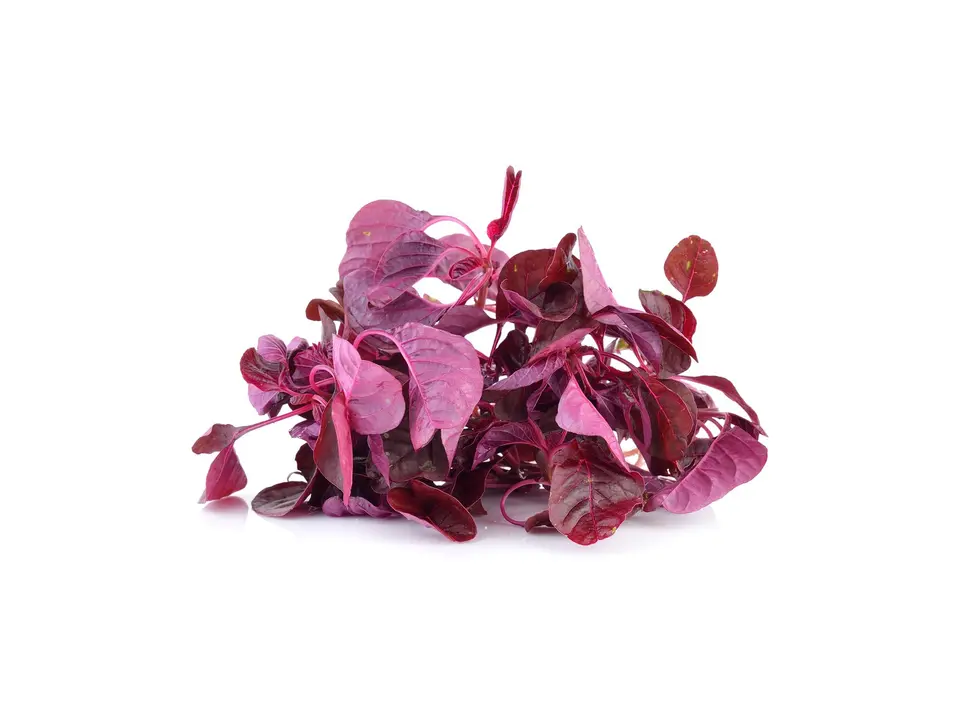 Coming soonVegetablesChinese spinach (amaranth)Soft green leaves, sometimes splashed with red, for soups and stir fries
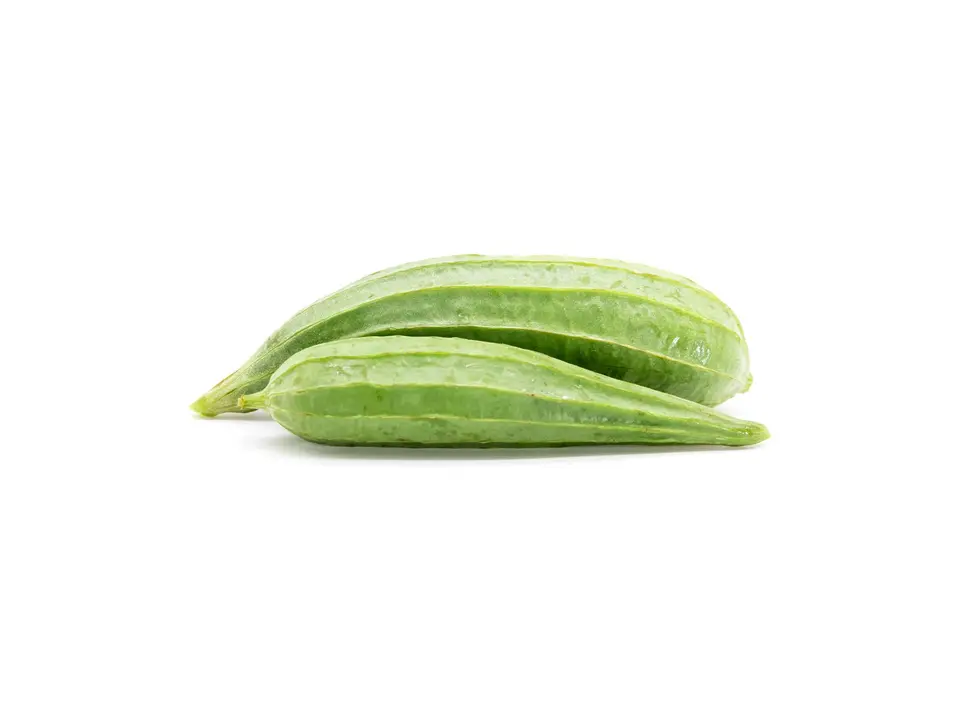 Coming soonVegetablesAngled gourdRidged green gourd that turns soft and sweet in soups and stir fries
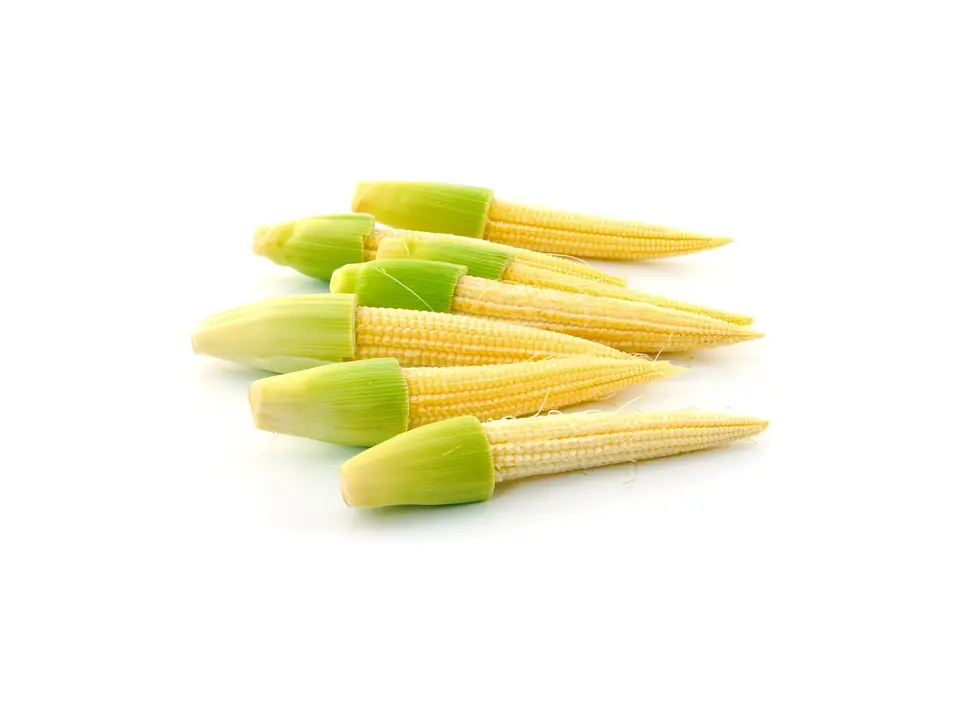 Coming soonVegetablesBaby cornLittle cobs that keep their snap in a hot wok
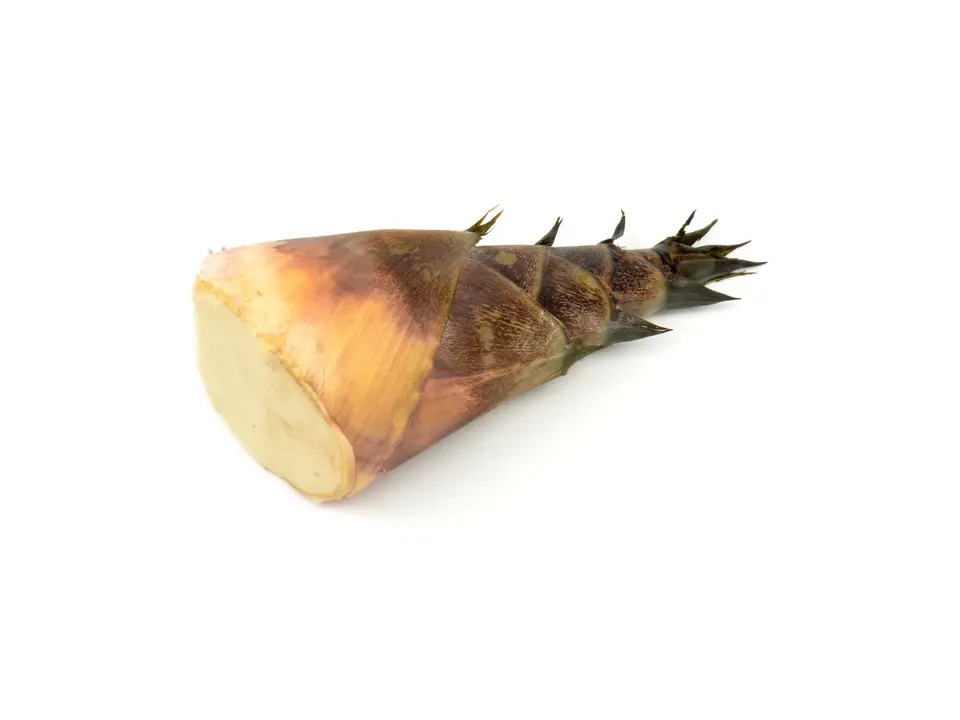 Coming soonVegetablesBamboo shootsCrunchy young shoots for curries, stir fries and northeastern salads