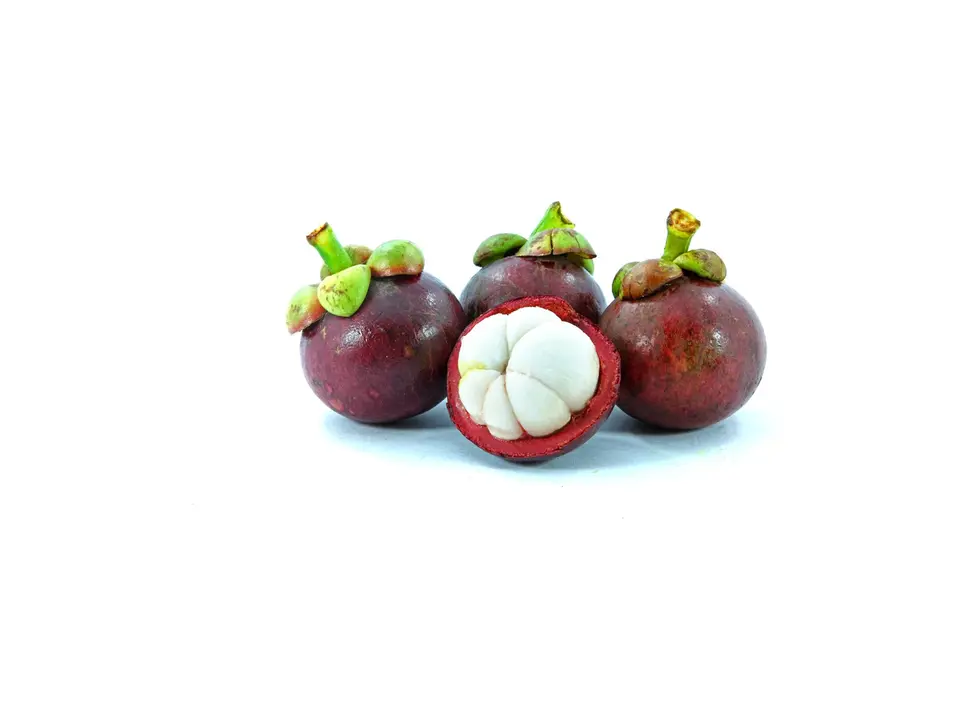
Mangosteen (mangkhut).
A deep purple shell around soft, white, sweet and sour segments
Coming soon
- Storage
- Keep mangosteen in a cool, dry spot and eat it within a few days, before the shell hardens.
- Keeps
- Best within a few days
- Season
- Mainly April to August, varies by region and year
- Origin
- Thailand
- Organic
- Certificate shown for each lot
Mangosteen looks like it was made to be opened slowly. The shell is a thick, dark purple rind with a green cap on top. Inside sit snowy white segments, soft and juicy, with a taste that's sweet first and then gently sour. Turn one over before you open it: the small flower-shaped mark on the bottom has as many points as there are segments inside.
Ways to use it
- Hold the fruit in both hands and press with your thumbs until the shell cracks, then lift the top off.
- Or run a knife lightly around the middle, through the rind only, and twist the halves apart.
- Eat the segments fresh, on their own or on a fruit plate. The larger ones have a seed.
- Chill the segments and serve them over crushed ice with a little syrup.
The purple juice in the rind stains cloth and wooden boards, so open it over a plate.
Storing it
Keep mangosteen in a cool, dry spot and eat it within a few days. Fresh fruit gives slightly when you press the shell. As it ages, the rind dries out and turns hard, which makes it difficult to open. Rinse the outside under running water before opening.
Where it comes from
Grown to certified organic standards. The certificate for each lot is shown when you trace your pack.
Every pack will carry a lot code. Enter it on the Trace your pack page and you will see the farms in that lot, the harvest date and the certificate.
What's inside
In 100 g of the part you eat
- Energy
- 77 kcal
- Protein
- 0.5 g
- Fibre
- 1.6 g
- Fat
- 0.06 g
No single vitamin or mineral reaches 15% of a day's need in 100 g.
Also has
- Copper 0.11 mg
- Vitamin B1 0.09 mg
- Vitamin C 5 mg
- Vitamin B2 0.06 mg
The % is the share of what a person aged 6 or over needs each day (Thai RDIs, Ministry of Public Health notice No. 445, 2023). The "Good for" line is shown only when 100 g gives 15% or more. Typical values from Thai Food Composition Database, Institute of Nutrition, Mahidol University (Mangosteen (Mung-kud)). Each harvest varies a little.
Good to know.
All guides- Storing fruit at homeWhich fruit goes in the fridge and which stays out, why a cold fridge can spoil a banana or mango, and why ripening fruit needs its own space.
- Thai fruit through the yearWhen the main Thai fruits are harvested, going by Department of Agricultural Extension figures, and why the same fruit turns up in different months.
- Washing and peeling fruitWhy fruit gets washed even when it's going to be peeled, what the shiny layer on an apple is, and what Thai FDA and the Department of Medical Sciences say.
More fruit.
See all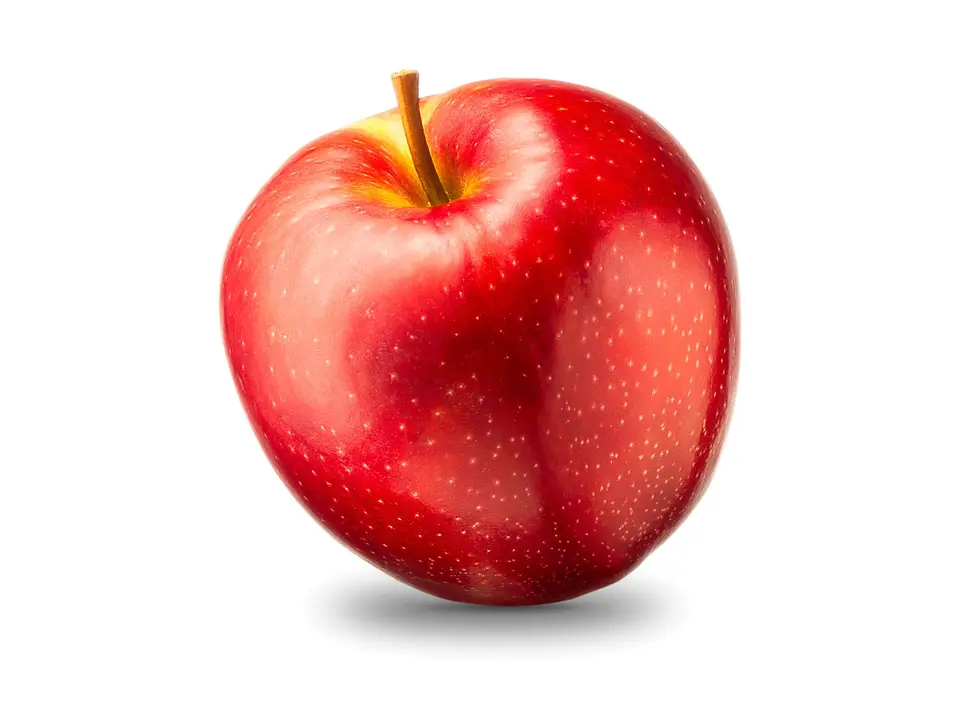 Coming soonFruitRed appleCrisp, juicy and sweet, for lunch boxes, salads and baking
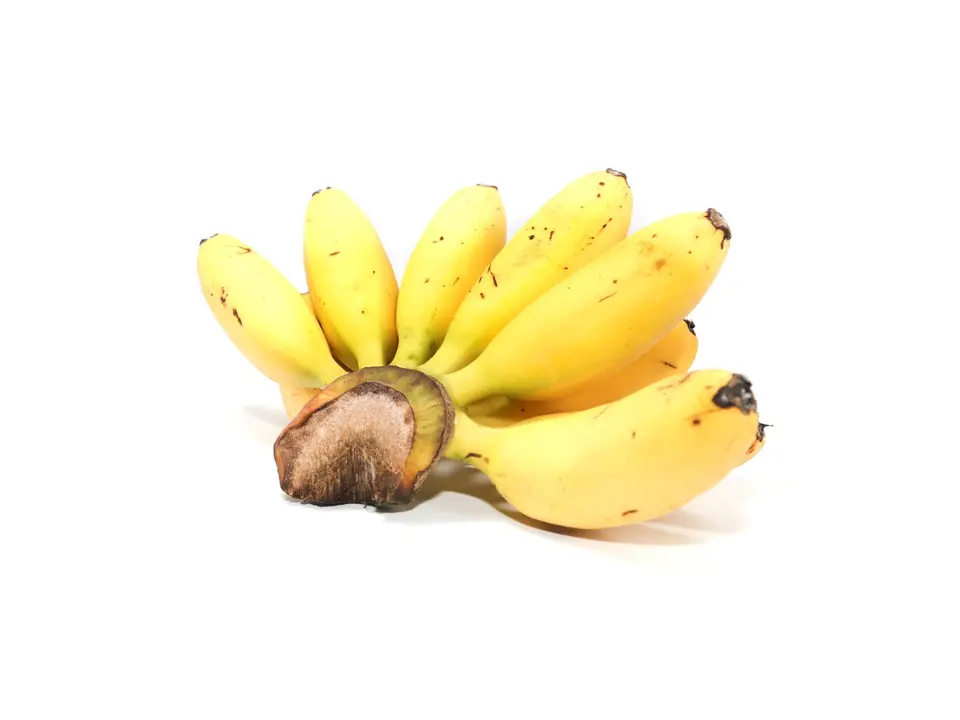 Coming soonFruitLady finger bananas (kluai khai)Small, thin-skinned bananas with golden, sweet flesh
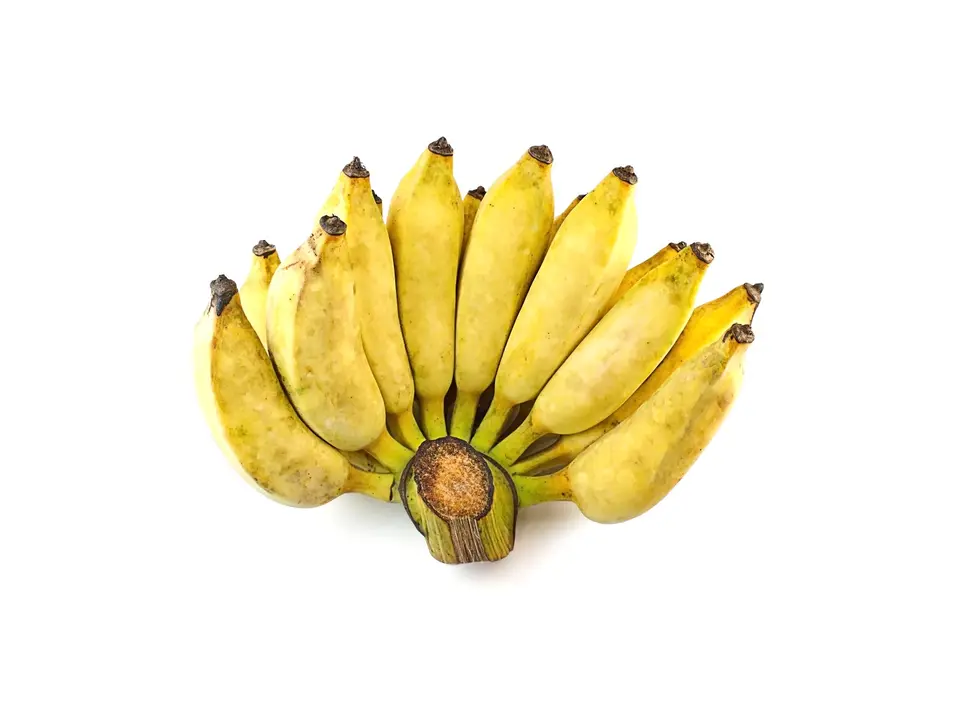 Coming soonFruitNamwa bananas (kluai namwa)Stout, sweet bananas that hold their shape in Thai desserts
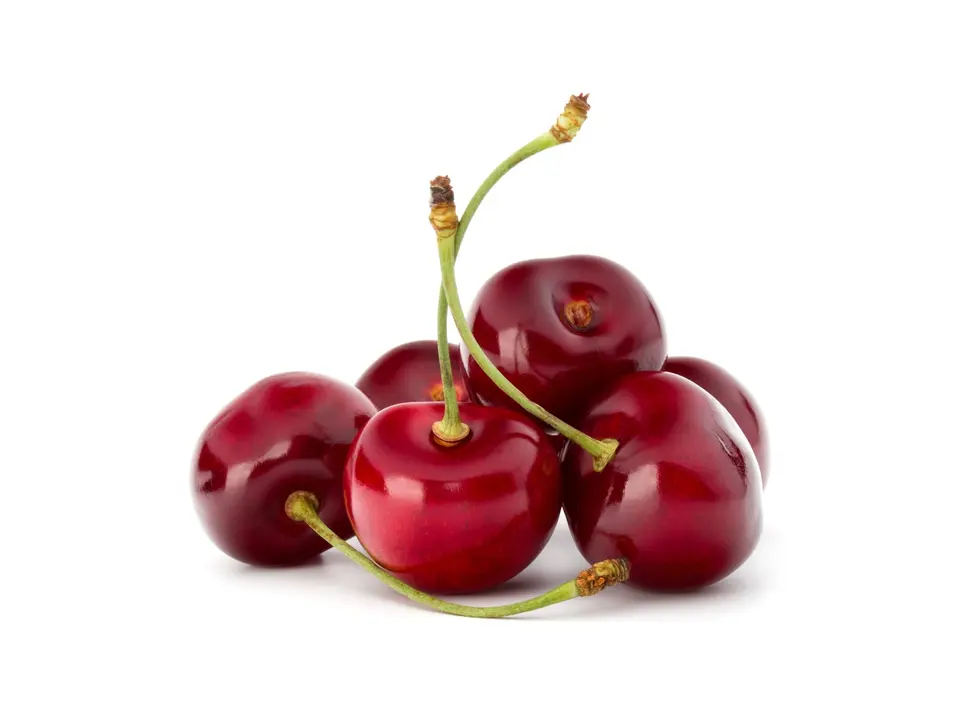 Coming soonFruitSweet cherryDark red, glossy fruit with a firm bite and a single stone