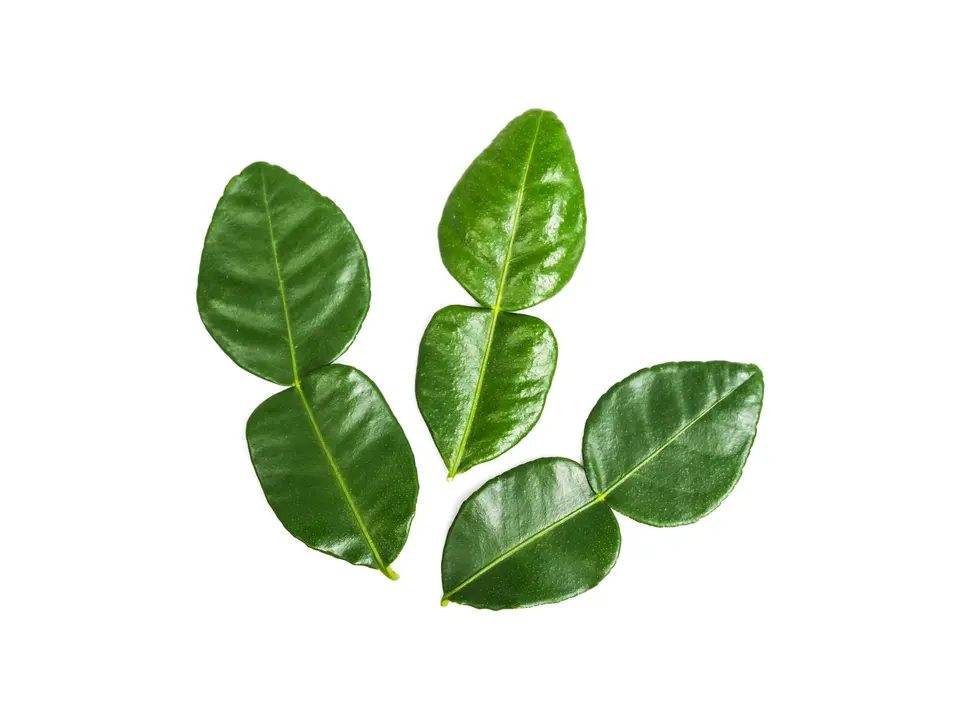
Kaffir lime leaves.
Glossy double leaves with a bright citrus scent for soups and curries
Coming soon
- Storage
- Keep the leaves in a bag in the fridge drawer, or freeze them in a sealed bag, and rinse just before use.
- Keeps
- Best within a few days
- Season
- All year, supply varies
- Origin
- Thailand
- Organic
- Certificate shown for each lot
Bai makrut, also known in English as makrut lime leaves, look like two glossy leaves joined end to end. They're thick and a little stiff, dark green on top and paler underneath. Crush one in your hand and the kitchen fills with a sharp, clean citrus smell. Few Thai soups and curries go without them, though the leaf itself is tough and is usually pushed to the side of the bowl unless it's been cut very fine.
Ways to use it
- Tear a few leaves and drop them into tom yum or tom kha in the last minutes of cooking.
- Remove the centre vein and shred the leaf as fine as thread, then scatter it over panaeng curry.
- Mix finely shredded leaf into the paste for tod man pla, the fried fish cakes.
- Add torn leaves to green or red curry and to stir fries made with curry paste.
- Fry whole leaves in hot oil for a few seconds until crisp, then crumble over rice or a yum salad.
Tearing or twisting the leaf before it goes in the pot releases more of the scent.
Storing it
Keep the leaves in a plastic bag in the fridge drawer and use them within a few days. For longer, freeze them flat in a sealed bag and take out what you need, since they go straight into the pot from frozen. Rinse them under running water just before use.
Where it comes from
Grown to certified organic standards. The certificate for each lot is shown when you trace your pack.
Every pack will carry a lot code. Enter it on the Trace your pack page and you will see the farms in that lot, the harvest date and the certificate.
What's inside
In 100 g of the part you eat
- Protein
- 5.5 g
- Fat
- 3.1 g
Rich in
- Copper1.8 mg200%
Good for: Helps the immune system and moves iron around the body.
- Vitamin C20 mg20%
Good for: Helps the immune system work normally and helps the body take up iron.
- Vitamin B10.2 mg17%
Good for: Helps turn food into energy.
- Iron3.3 mg15%
Good for: Helps make red blood cells, which carry oxygen.
The bar shows how much of a day's need 100 g gives.
Also has
- Vitamin A 110 µg
- Potassium 352 mg
- Vitamin B3 1 mg
- Phosphorus 35 mg
- Zinc 0.5 mg
Herbs are eaten a little at a time, so one dish gives a smaller share than shown here.
The % is the share of what a person aged 6 or over needs each day (Thai RDIs, Ministry of Public Health notice No. 445, 2023). The "Good for" line is shown only when 100 g gives 15% or more. Typical values from Thai Food Composition Database, Institute of Nutrition, Mahidol University (Leech lime or Kaffir lime, leaves). Each harvest varies a little.
Good to know.
All guides- Storing leafy greens and herbsLeafy greens last longest cold, humid and unwashed. A few herbs and vegetables are hurt by the fridge, and the sources give temperatures for each.
- Washing vegetables at homeWhat Thai FDA and the Department of Medical Sciences say about washing vegetables, and what washing can and can't remove.
More herbs.
See all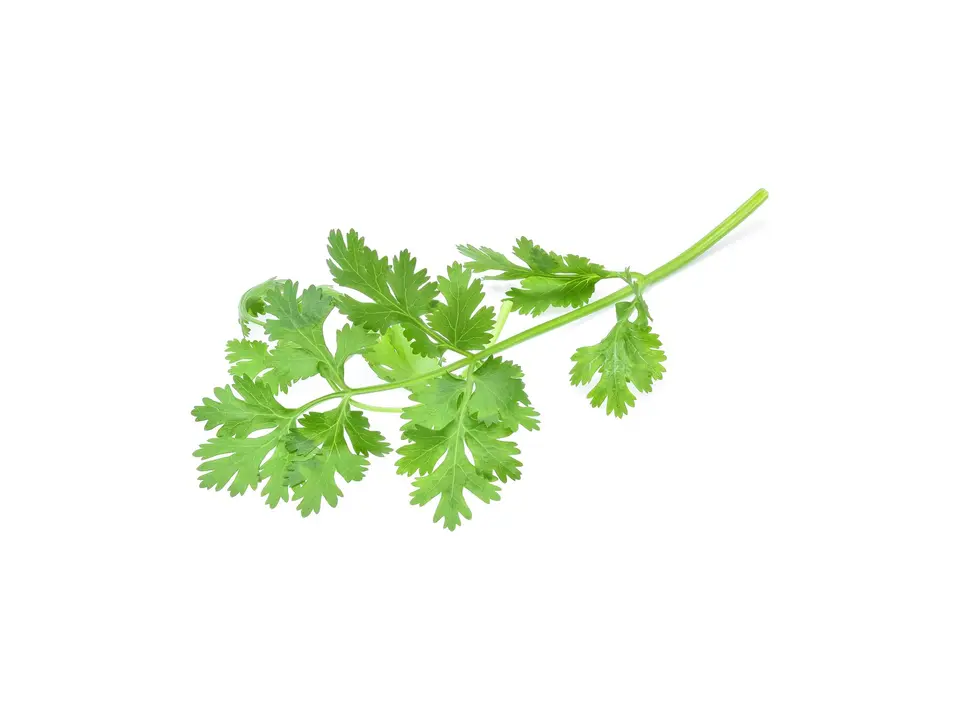 Coming soonHerbsCoriander (phak chi)Lacy, citrusy leaves, with stems and roots worth keeping
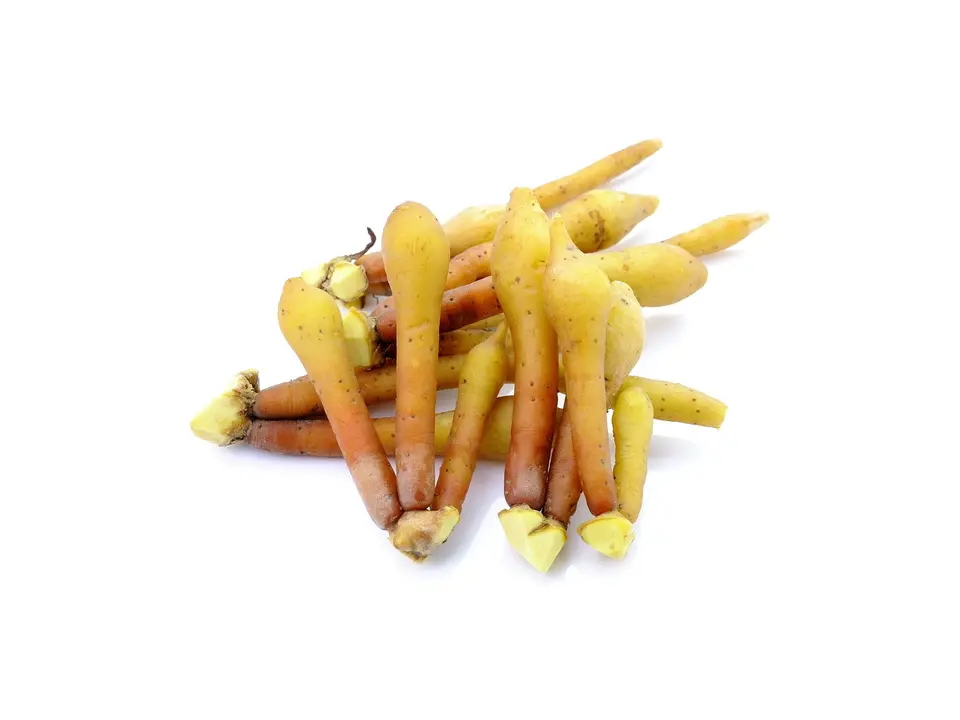 Coming soonHerbsFingerroot (krachai)Bunches of slim golden roots with a warm, earthy bite
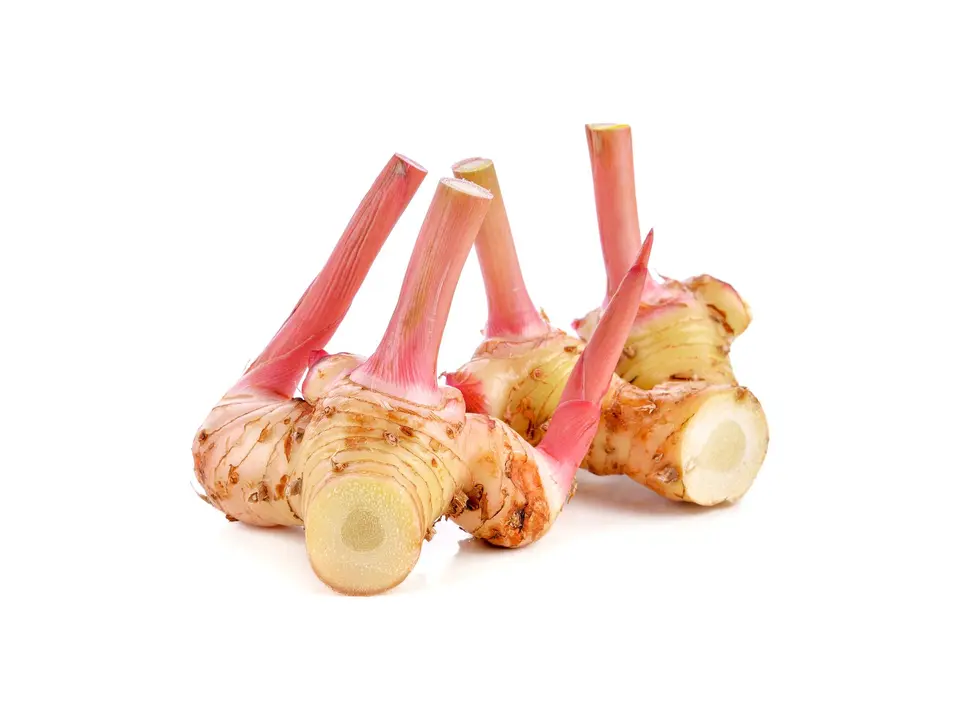 Coming soonHerbsGalangalA hard, pale root with a sharp smell of pine
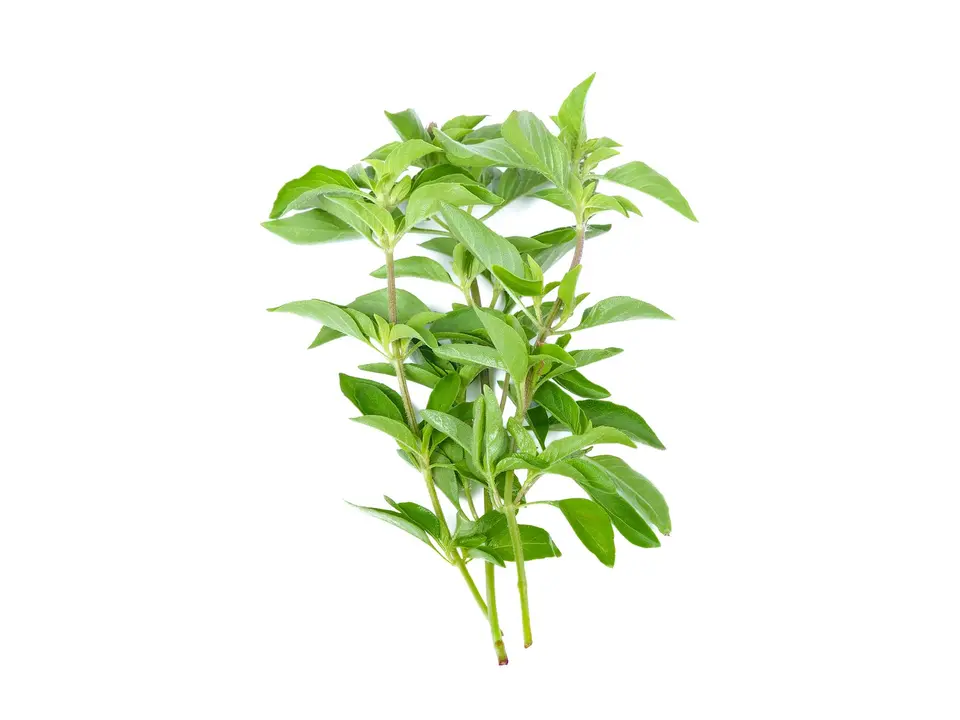 Coming soonHerbsLemon basil (maenglak)Small, soft leaves with a clear lemon scent