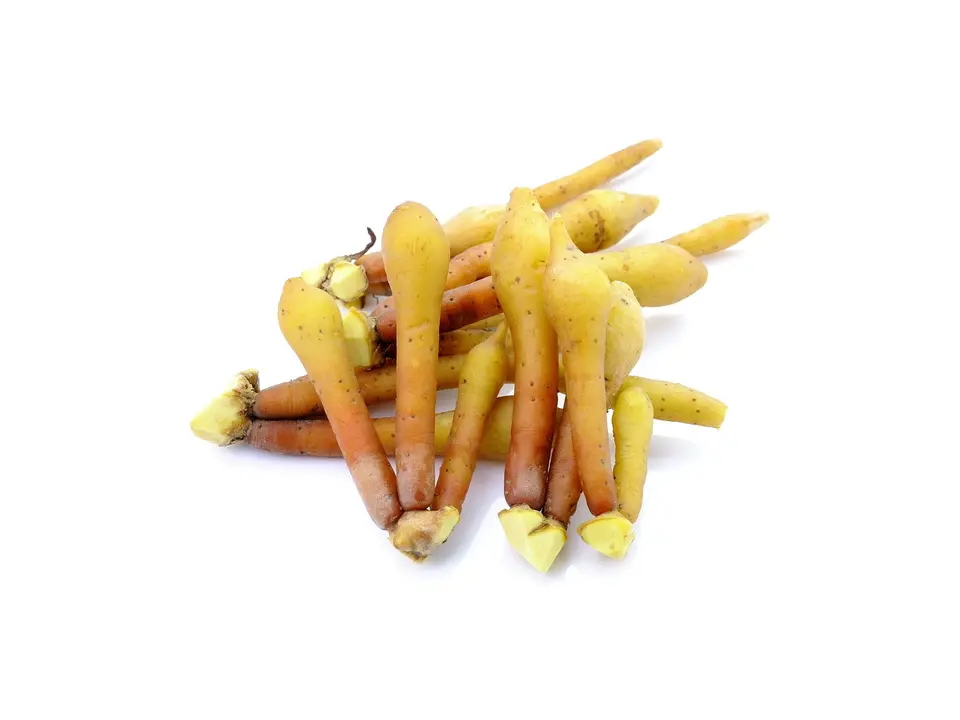
Fingerroot (krachai).
Bunches of slim golden roots with a warm, earthy bite
Coming soon
- Storage
- Keep the roots dry and unwashed, and scrub them with a clean brush under running water just before use.
- Keeps
- Best within a few days
- Season
- All year, supply varies
- Origin
- Thailand
- Organic
- Certificate shown for each lot
Krachai grows as a cluster of slim roots hanging from one small knob, which is where the name fingerroot comes from. The skin is light brown and the inside pale yellow. It smells warm and earthy, a little like ginger but softer, with a faint camphor note, and it has a mild peppery bite. It's the flavour that sets jungle curry and many fish dishes apart from the rest.
Ways to use it
- Cut into fine matchsticks and add to kaeng pa, the jungle curry made without coconut milk.
- Stir fry matchsticks with seafood, green peppercorns and holy basil in pad cha.
- Pound it into the sauce for khanom jeen nam ya, the fish curry served over rice noodles.
- Add to fish curries and soups, where it softens any strong fishy smell.
- Pound a little with chilli and garlic into a paste for stir fried catfish.
Snap off the fingers you need, trim the ends and scrape off the skin with a spoon. Then slice or shred it thinly.
Storing it
Keep the roots dry and unwashed and use them within a few days. Scrub them with a clean brush under running water right before cooking, since soil collects where the fingers join. Roots that start to shrivel are still fine to pound into a paste.
Where it comes from
Grown to certified organic standards. The certificate for each lot is shown when you trace your pack.
Every pack will carry a lot code. Enter it on the Trace your pack page and you will see the farms in that lot, the harvest date and the certificate.
What's inside
In 100 g of the part you eat
- Energy
- 21 kcal
- Protein
- 0.34 g
- Fibre
- 0.6 g
- Fat
- 0.42 g
Rich in
- Vitamin B20.41 mg34%
Good for: Helps turn food into energy and eases tiredness.
The bar shows how much of a day's need 100 g gives.
Also has
- Iron 2.3 mg
- Potassium 288 mg
- Vitamin B3 1 mg
- Magnesium 18 mg
Herbs are eaten a little at a time, so one dish gives a smaller share than shown here.
The % is the share of what a person aged 6 or over needs each day (Thai RDIs, Ministry of Public Health notice No. 445, 2023). The "Good for" line is shown only when 100 g gives 15% or more. Typical values from Thai Food Composition Database, Institute of Nutrition, Mahidol University (Fingerroot, raw). Each harvest varies a little.
Good to know.
All guides- Washing vegetables at homeWhat Thai FDA and the Department of Medical Sciences say about washing vegetables, and what washing can and can't remove.
- Why organic vegetables can look less uniformInsect marks and uneven sizes come down to how crops are grown and how they are graded. What the Thai organic standard says, and how sorting by looks works.
More herbs.
See all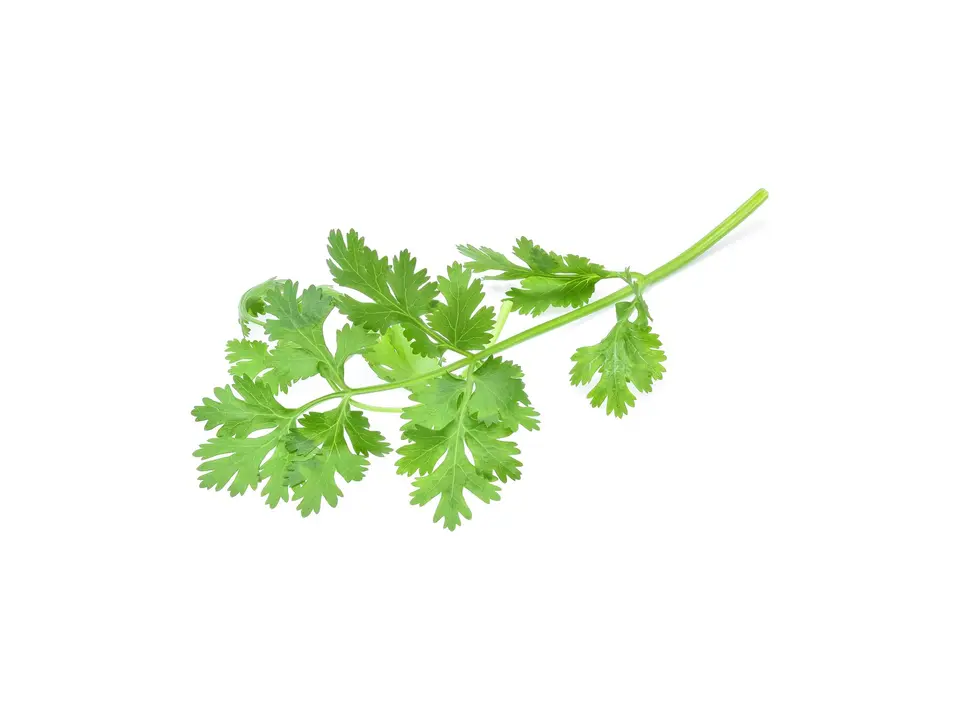 Coming soonHerbsCoriander (phak chi)Lacy, citrusy leaves, with stems and roots worth keeping
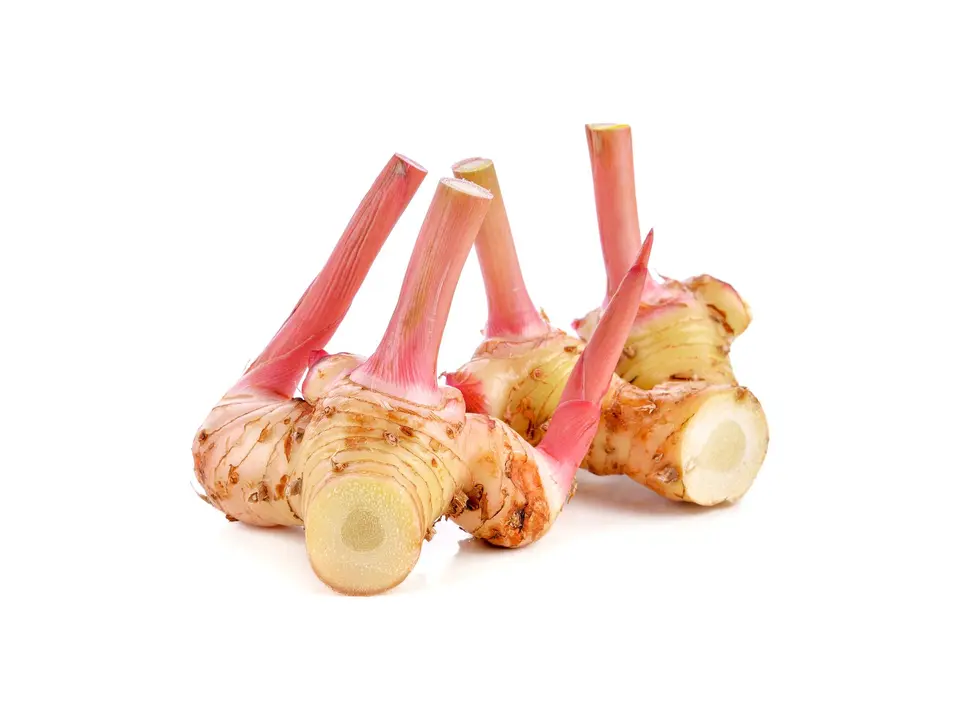 Coming soonHerbsGalangalA hard, pale root with a sharp smell of pine
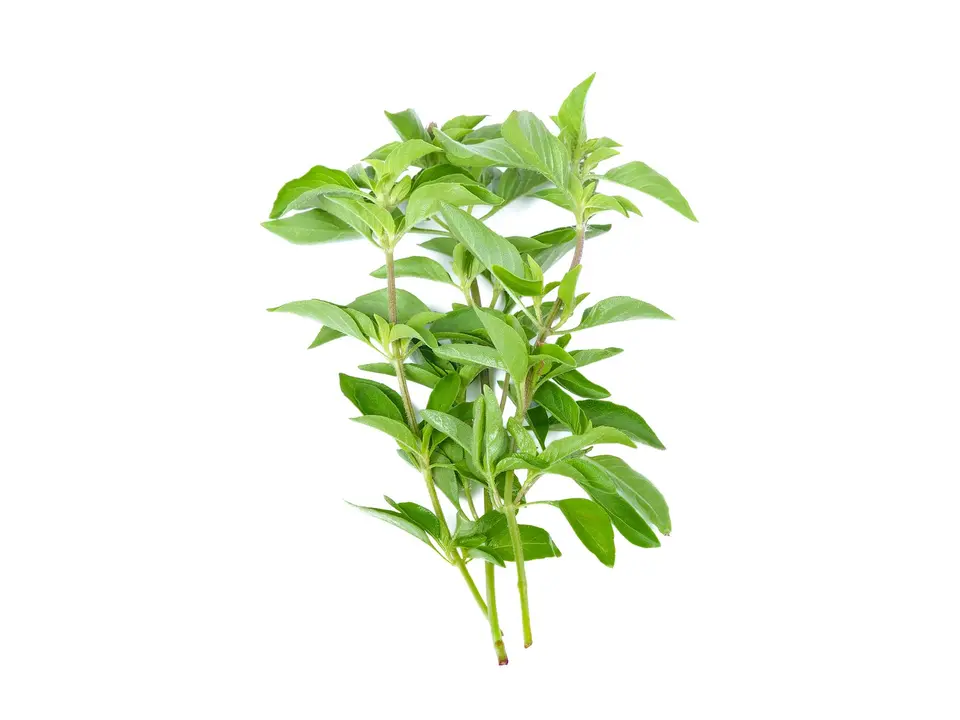 Coming soonHerbsLemon basil (maenglak)Small, soft leaves with a clear lemon scent
 Coming soonHerbsKaffir lime (makrut)Knobbly green limes with a fragrant, oily zest for curry paste