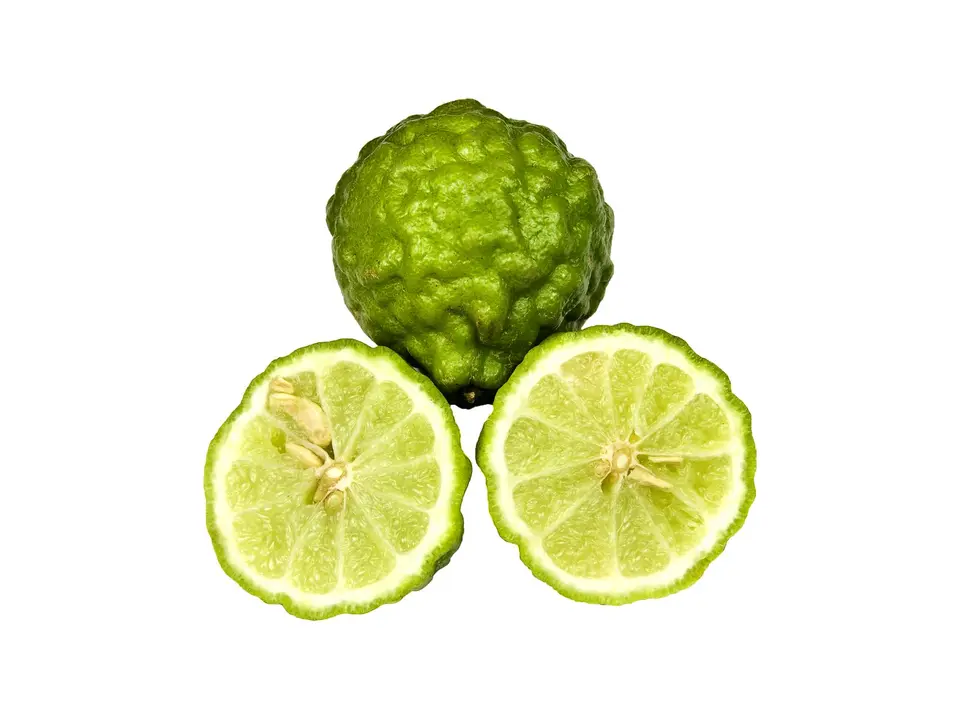
Kaffir lime (makrut).
Knobbly green limes with a fragrant, oily zest for curry paste
Coming soon
- Storage
- Keep the limes dry in a cool spot or in the fridge's vegetable drawer, and wash them just before you grate or cut them.
- Keeps
- Best within a few days
- Season
- All year, supply varies
- Origin
- Thailand
- Organic
- Certificate shown for each lot
Makrut is easy to tell apart from an ordinary lime. The skin is dark green, thick and covered in bumps and wrinkles, and when you scratch it the smell is sharp, floral and very strong. Inside there's not much juice, and what there is tastes sour with a bitter edge. The real prize is the zest. A small amount goes a long way in Thai curry pastes, where it gives that bright, perfumed note you can't get from anything else.
Ways to use it
- Grate or finely chop the outer green zest into red curry, green curry or chu chee paste. Leave the white pith behind, it's bitter.
- Pound a little zest into the paste for tod man pla, the Thai fish cakes.
- Squeeze a few drops of juice into a nam prik or a sour soup, tasting as you go.
- Halve a used lime and drop it into a pot of tom yum or a clear broth for scent.
Storing it
Keep the limes dry, in a cool place or in the fridge's vegetable drawer, and use them while the skin is still firm and glossy. Scrub them under running water before grating, because the zest is the part you eat. If you won't use a whole lime at once, grate the zest you don't need and freeze it in a small, tightly closed container.
Where it comes from
Grown to certified organic standards. The certificate for each lot is shown when you trace your pack.
Every pack will carry a lot code. Enter it on the Trace your pack page and you will see the farms in that lot, the harvest date and the certificate.
What's inside
In 100 g of the part you eat
- Protein
- 3.4 g
- Fat
- 1.5 g
Rich in
- Vitamin C110 mg110%
Good for: Helps the immune system work normally and helps the body take up iron.
The bar shows how much of a day's need 100 g gives.
Also has
- Vitamin B2 0.14 mg
- Phosphorus 60 mg
- Vitamin B1 0.06 mg
Herbs are eaten a little at a time, so one dish gives a smaller share than shown here.
The % is the share of what a person aged 6 or over needs each day (Thai RDIs, Ministry of Public Health notice No. 445, 2023). The "Good for" line is shown only when 100 g gives 15% or more. Typical values from Thai Food Composition Database, Institute of Nutrition, Mahidol University (Leech lime or Kaffir lime, peels). Each harvest varies a little.
Good to know.
All guides- Washing and peeling fruitWhy fruit gets washed even when it's going to be peeled, what the shiny layer on an apple is, and what Thai FDA and the Department of Medical Sciences say.
- Wasting less food at homeHouseholds throw away most of the world's wasted food. Planning, using older food first and finding a use for leftovers are the habits FAO and UNEP point to.
More herbs.
See all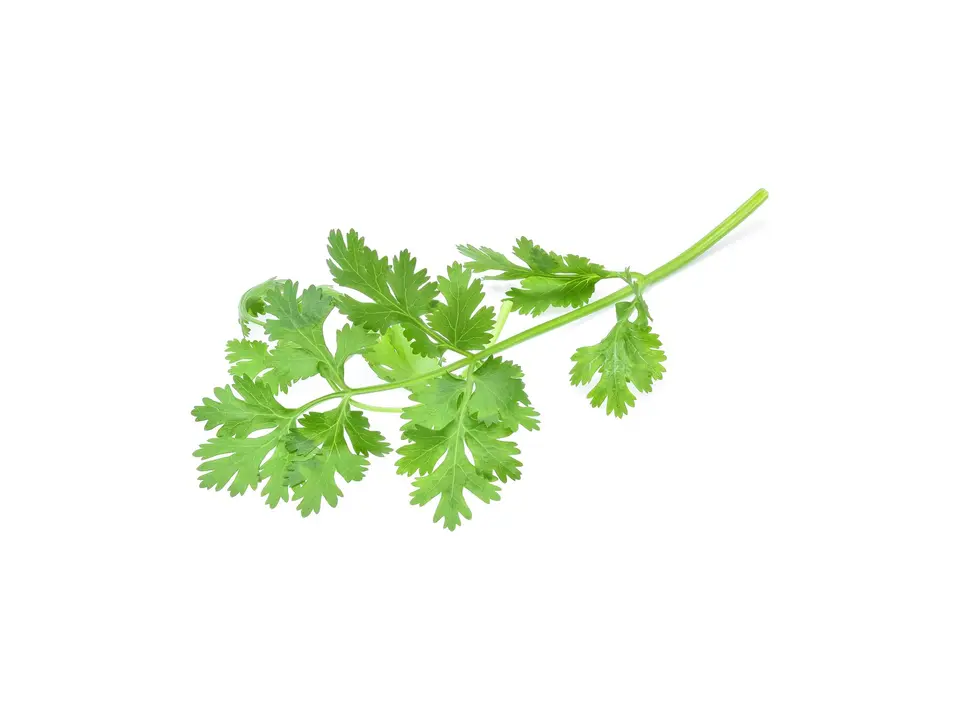 Coming soonHerbsCoriander (phak chi)Lacy, citrusy leaves, with stems and roots worth keeping
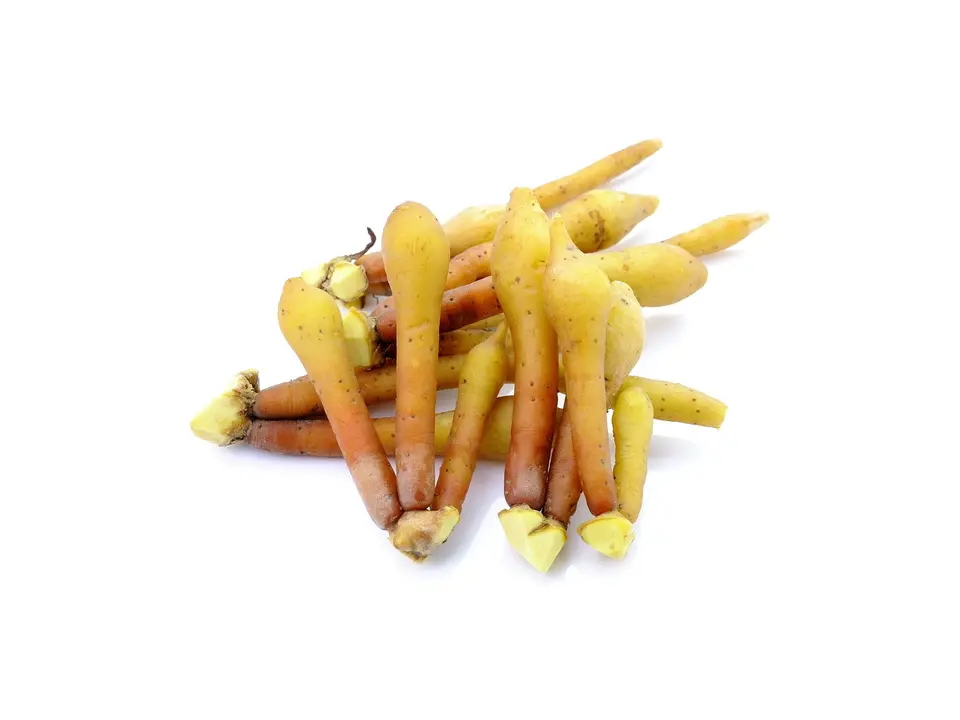 Coming soonHerbsFingerroot (krachai)Bunches of slim golden roots with a warm, earthy bite
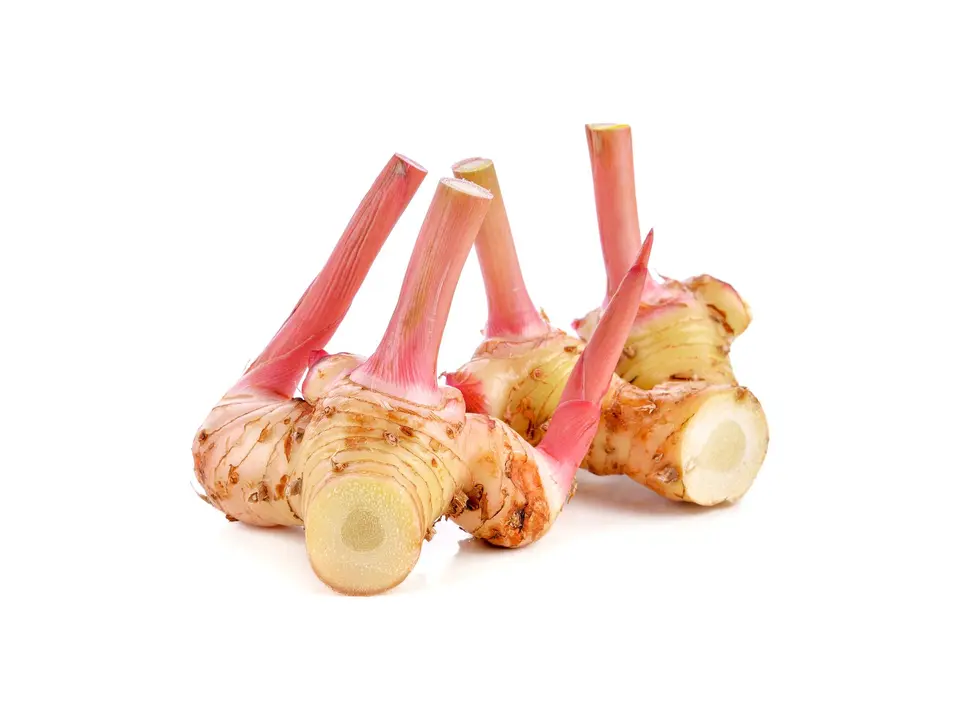 Coming soonHerbsGalangalA hard, pale root with a sharp smell of pine
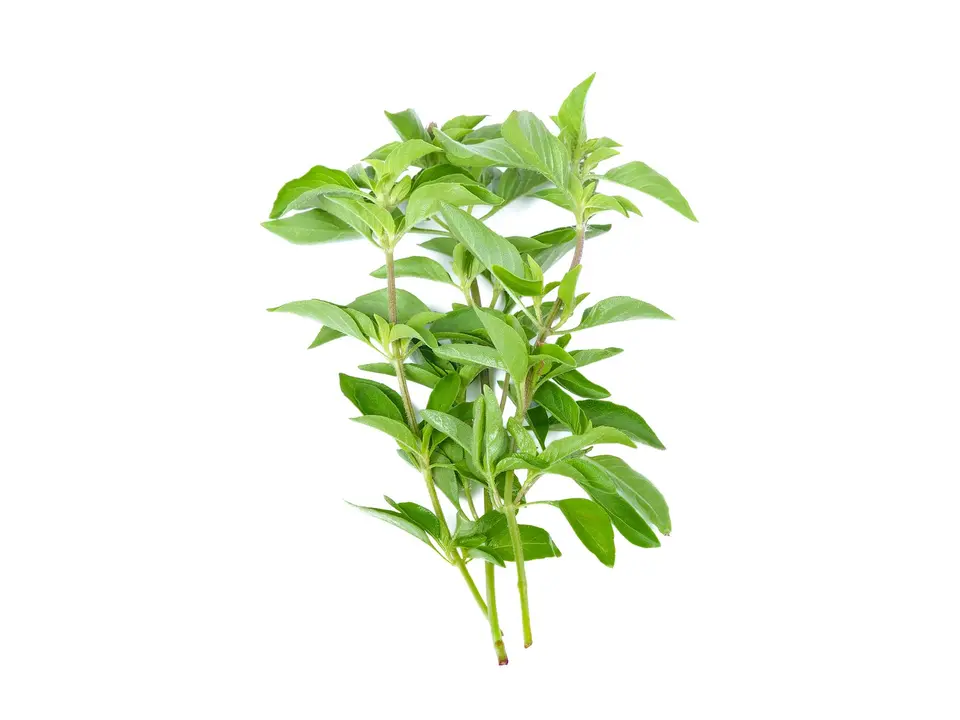 Coming soonHerbsLemon basil (maenglak)Small, soft leaves with a clear lemon scent