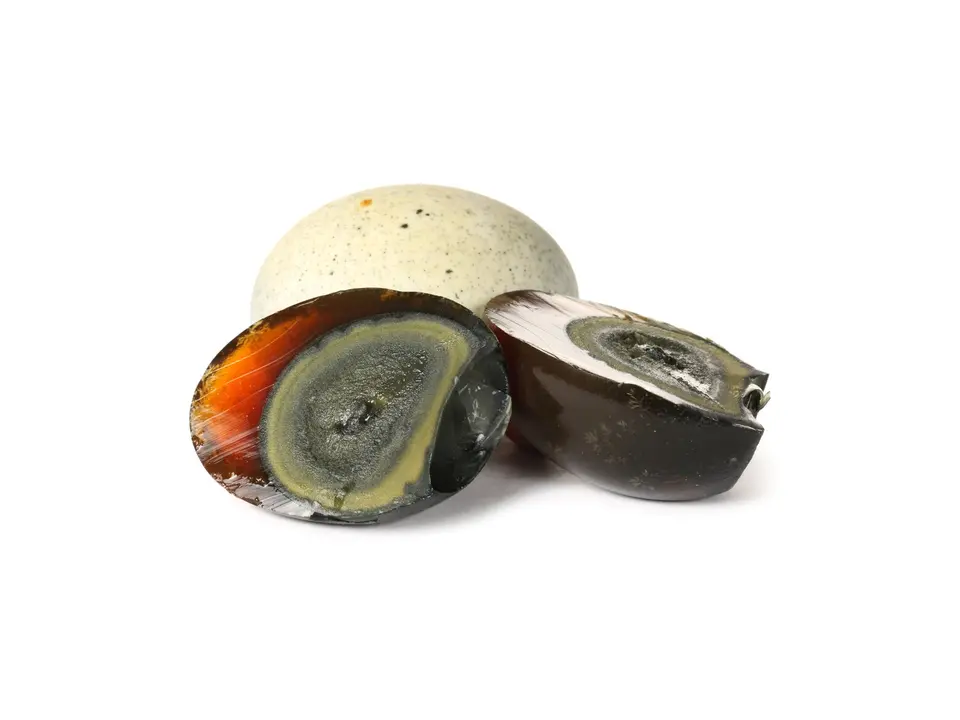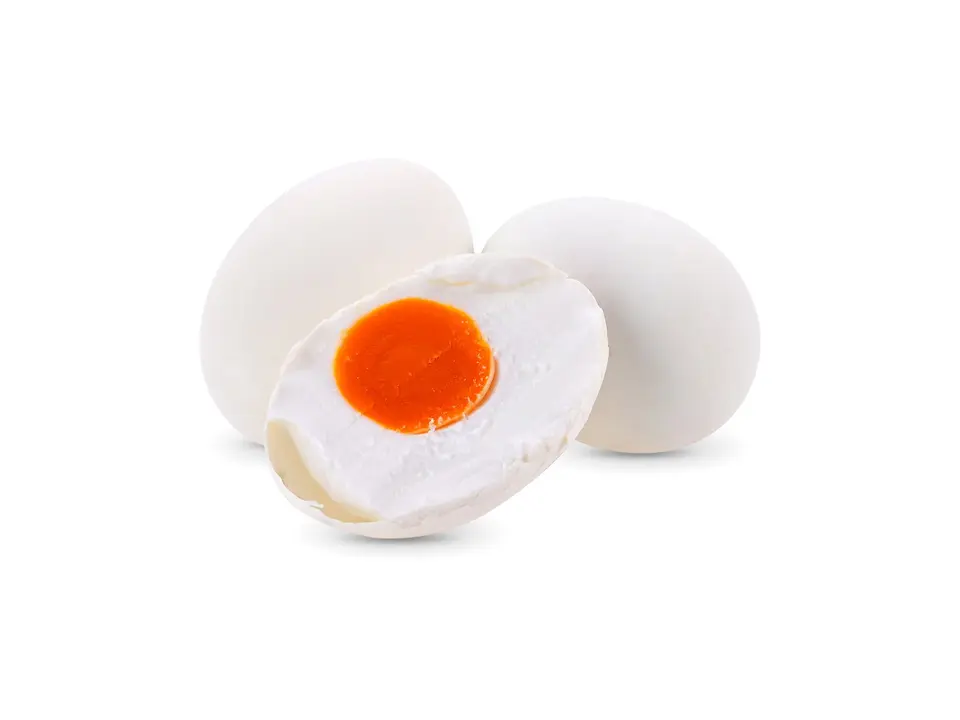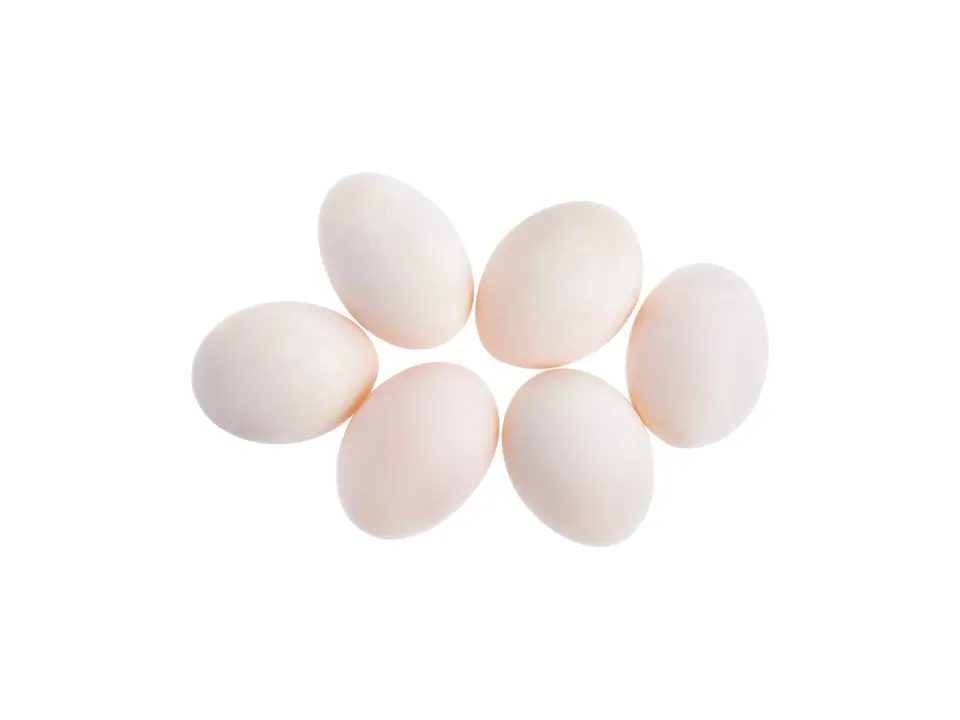
Duck eggs.
Big, rich eggs for omelettes, desserts and the curry pot
Coming soon
- Storage
- Keep the eggs in their carton, move them to an inside shelf of the fridge after about a week, and do not freeze them.
- Keeps
- About a week at room temperature, longer in the fridge
- Season
- All year
- Origin
- Thailand
- Organic
- Certificate shown for each lot
A duck egg is bigger than a hen's egg, with a thicker shell that can be chalk white or a very pale blue-green. Crack one open and the yolk sits high and wide, a deep yellow that takes up more of the egg. It tastes richer and a little stronger. Many Thai cooks reach for duck eggs when they want an omelette that puffs up thick, or a dessert with a deep golden colour.
Ways to use it
- Beat into a khai jiao with a splash of fish sauce and fry in plenty of hot oil until the edges puff and crisp.
- Boil and halve over rice, or simmer whole in a sweet, dark palo broth with pork and tofu.
- Use the yolks in Thai golden desserts such as thong yip and foi thong, where the colour matters.
- Bake with them. Cakes come out with a richer crumb and a yellower colour.
Watch the heat. The white of a duck egg sets firmer than a hen's egg, and if you fry or boil it too long it turns rubbery. A soft fry or a gentle simmer suits it best.
Storing it
Thai guidance for eggs is to keep them at room temperature for up to about a week, then move them into the fridge. Leave them in the carton, put it on an inside shelf rather than in the door, and don't freeze them. Wash a shell only just before you crack it.
Where it comes from
Grown to certified organic standards. The certificate for each lot is shown when you trace your pack.
Every pack will carry a lot code. Enter it on the Trace your pack page and you will see the farms in that lot, the packing date and the certificate.
What's inside
In 100 g of the part you eat
- Energy
- 173 kcal
- Protein
- 13.9 g
- Fibre
- 0 g
- Fat
- 12.2 g
Rich in
- Selenium47.9 µg80%
Good for: Helps the immune system and keeps hair and nails normal.
- Vitamin B20.44 mg37%
Good for: Helps turn food into energy and eases tiredness.
- Phosphorus214 mg31%
Good for: Needed for normal bones and teeth.
- Protein13.9 g28%
Good for: Helps build and keep muscle.
- Vitamin A199 µg25%
Good for: Helps keep eyesight and skin normal.
- Vitamin B10.27 mg23%
Good for: Helps turn food into energy.
The bar shows how much of a day's need 100 g gives.
Also has
- Iron 2.4 mg
- Zinc 1.1 mg
- Copper 0.08 mg
- Calcium 67 mg
The % is the share of what a person aged 6 or over needs each day (Thai RDIs, Ministry of Public Health notice No. 445, 2023). The "Good for" line is shown only when 100 g gives 15% or more. Typical values from Thai Food Composition Database, Institute of Nutrition, Mahidol University (Egg, duck, whole, raw). Each harvest varies a little.
Good to know.
All guides- How to store eggs in a hot climateThai advice is to move eggs into the fridge after about a week. Other countries say different things because their eggs are handled differently on the way.
- How to tell whether an egg is freshA fresh egg has a small air cell, a firm white and a round yolk. Floating in water shows age, not spoilage. How each check works and where it falls short.
- Boiling and peeling eggsAn egg that has sat in the fridge for a week peels more cleanly than a new one, and a cold bath after cooking helps. Timings, peeling and keeping.