Use eggs that are about a week old, and put them into cold water as soon as they come off the heat. Those two habits do most of the work. A very fresh egg tends to cling to its shell however careful you are, and you end up with a pitted white and bits of shell under your thumbnail. The sources here are from the United States and the United Kingdom, but the method suits any ordinary hen's egg.
Why a fresh egg sticks to its shell
Just inside the shell is a thin skin, the membrane, pressed against the egg white. According to British Lion Eggs, an egg only a few days old sticks to its shell more, and the membrane loosens as the egg gets older.
North Carolina State Extension explains it much the same way. Eggs bought 7 to 10 days before you cook them have had time to take in air through the shell, and that air helps the membrane come away.
So if you're planning boiled eggs, reach for the ones that have been in the fridge for several days and are still within their date, not the ones you brought home this morning.
Cooking them through without a green ring
The method North Carolina State Extension describes is a gentle one. The eggs finish cooking in hot water with the heat switched off.
- Lay the eggs in a single layer on the bottom of a saucepan.
- Pour in cold water to cover them by about 2.5 cm.
- Heat until the water boils, then turn off the heat and put the lid on.
- Leave them for 12 to 18 minutes.
The same page breaks the time down by size: 9 minutes for medium eggs, 12 for large and 15 for extra large. It calls them hard-cooked rather than hard-boiled, for a reason: eggs that are boiled hard can turn rubbery, and a green ring may form around the yolk.
British Lion Eggs adds one more point in favour of cooling the eggs fast: it stops a grey line forming around the yolk.
Cooling and peeling
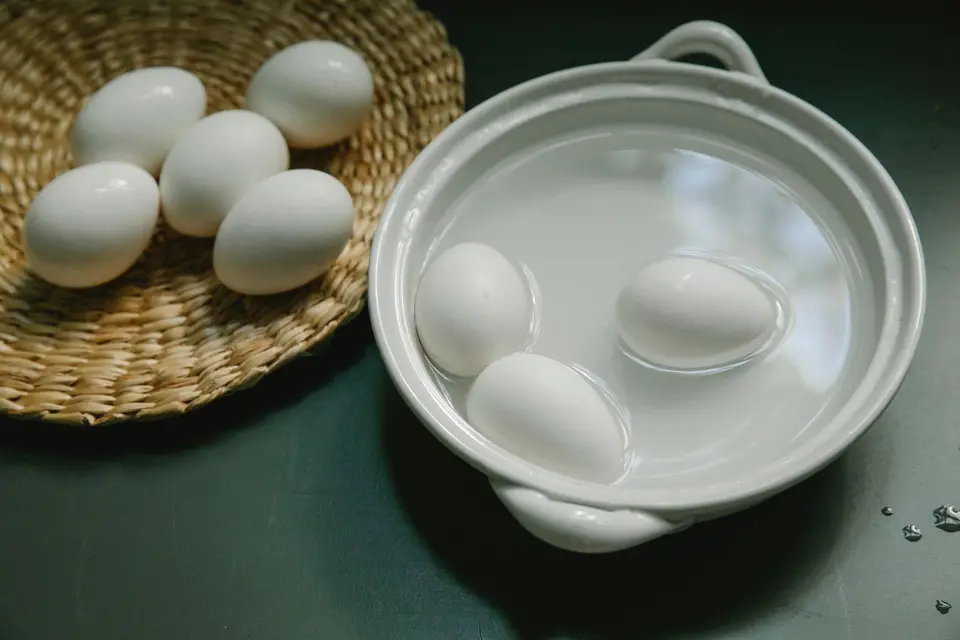
Both sources send the eggs into cold water once they're done. North Carolina State Extension suggests 5 minutes in an ice bath. British Lion Eggs explains why it works. The egg shrinks a little in cool water, so it is less likely to stick to the shell. It also suggests changing the water once or twice so that it stays cold.
Then peel:
- Tap the egg gently on the counter until the shell is cracked finely all over.
- Roll it between your hands to loosen the shell.
- Start at the wide end, where a small pocket of air sits between the shell and the egg.
- Hold it under cold running water, which helps the shell slide away.
How long boiled eggs keep
Not as long as raw eggs in the shell. North Carolina State Extension says boiled eggs still in their shells keep for up to 1 week in a fridge at 5 degrees Celsius or below. Once peeled, they are best eaten the same day.
Healthline, quoting US Department of Agriculture guidance, says boiled eggs should be cooled and in the fridge within 2 hours of cooking, on an inside shelf rather than in the door. Don't freeze them. The white and yolk turn tough and watery.
If you find a greenish-grey layer on the outside of the yolk, the same page says it comes from the cooking and does not mean the egg has spoiled. A slimy shell or a strong, unpleasant smell does.
In short
- An egg about a week old peels more cleanly than one laid only a few days ago.
- Bring the eggs to the boil in cold water, then leave them off the heat with the lid on for 12 to 18 minutes, or about 9, 12 and 15 minutes for medium, large and extra large eggs.
- About 5 minutes in cold or iced water before peeling makes the shell come away more easily.
- Boiled eggs in the shell keep up to 1 week in the fridge. Peeled ones are best eaten the same day.
Common questions
How long do boiled eggs keep in the fridge?
Boiled eggs still in their shells keep for up to 1 week in a fridge at 5 degrees Celsius or below, and once peeled they are best eaten the same day according to North Carolina State Extension.
Why do fresh eggs stick to the shell?
According to British Lion Eggs, an egg only a few days old sticks to its shell more because the thin membrane inside is pressed tightly against the white and loosens as the egg gets older.
What causes a green ring on a cooked egg yolk?
North Carolina State Extension notes that eggs boiled hard can turn rubbery and form a green ring around the yolk, while British Lion Eggs adds that cooling them fast stops a grey line forming.