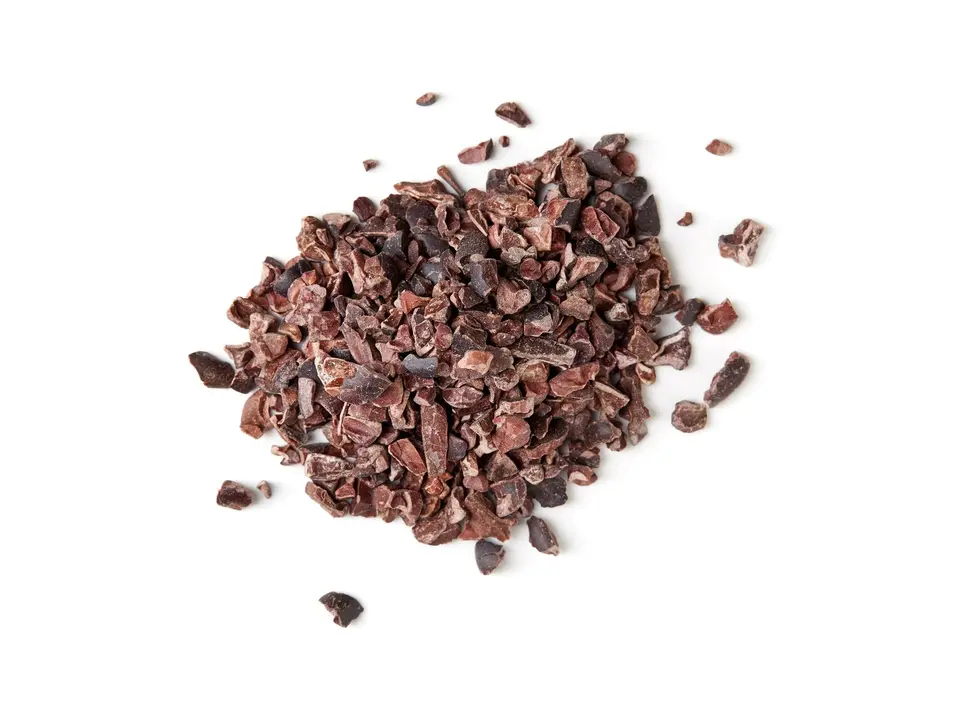
Organic cacao nibs.
Crunchy pieces of cacao bean, bitter and chocolatey
Coming soon
- Storage
- Keep in a cool, dry place in a sealed container, away from sunlight.
- Keeps
- See the best-before date on the pack
- Season
- All year
- Origin
- Shown for each lot
- Organic
- Certificate shown for each lot
Cacao nibs are cacao beans that have been fermented, dried, shelled and broken into small pieces. They are what chocolate is made from, before any sugar or milk goes in. So they taste of dark chocolate, but bitter and dry, with a crunch like roasted coffee beans and a fruity, slightly sour edge. A small spoonful is enough to give a dish a chocolate note.
Ways to use it
- Sprinkle them over yoghurt, oats, fruit or a smoothie bowl for crunch.
- Fold them into cookie, brownie or banana bread batter, where they stay crunchy and don't melt.
- Blend a spoonful into a smoothie or a cold coffee drink.
- Mix them with chopped nuts and dried fruit for a snack mix.
- Steep them in hot milk, strain, and sweeten to taste for a light cacao drink.
Because they have no sugar, they pair well with sweet things like ripe banana, dates, honey or a sweet dough. If the bitterness is too much on its own, start by mixing them half and half with chocolate chips.
Storing it
Keep the sealed pack in a cool, dry cupboard out of the sun and away from strong smells. Once it's open, move the nibs into a jar with a tight lid.
Where it comes from
Grown to certified organic standards. The certificate for each lot is shown when you trace your pack.
Every pack will carry a lot code. Enter it on the Trace your pack page and you will see the farms in that lot, the packing date and the certificate.
What's inside
In 100 g, dry, before cooking
- Energy
- 642 kcal
- Protein
- 14.3 g
- Fibre
- 16.6 g
- Fat
- 52.3 g
Rich in
- Copper3.2 mg359%
Good for: Helps the immune system and moves iron around the body.
- Manganese4.2 mg139%
Good for: Helps keep bones normal and protects cells.
- Magnesium327 mg105%
Good for: Helps muscles work normally and eases tiredness.
- Zinc9.6 mg88%
Good for: Helps the immune system and keeps skin, hair and nails normal.
- Iron17.4 mg79%
Good for: Helps make red blood cells, which carry oxygen.
- Fibre16.6 g66%
Good for: Helps keep digestion regular.
The bar shows how much of a day's need 100 g gives.
Also has
- Phosphorus 400 mg
- Potassium 830 mg
- Vitamin K 9.7 µg
- Selenium 8.1 µg
- Vitamin B1 0.15 mg
- Calcium 101 mg
- Vitamin B3 1.4 mg
- Vitamin B2 0.1 mg
- Folate 28 µg
The % is the share of what a person aged 6 or over needs each day (Thai RDIs, Ministry of Public Health notice No. 445, 2023). The "Good for" line is shown only when 100 g gives 15% or more. Typical values from USDA FoodData Central (Baking chocolate, unsweetened, squares). Each harvest varies a little.
Good to know.
All guidesMore grains and seeds.
See all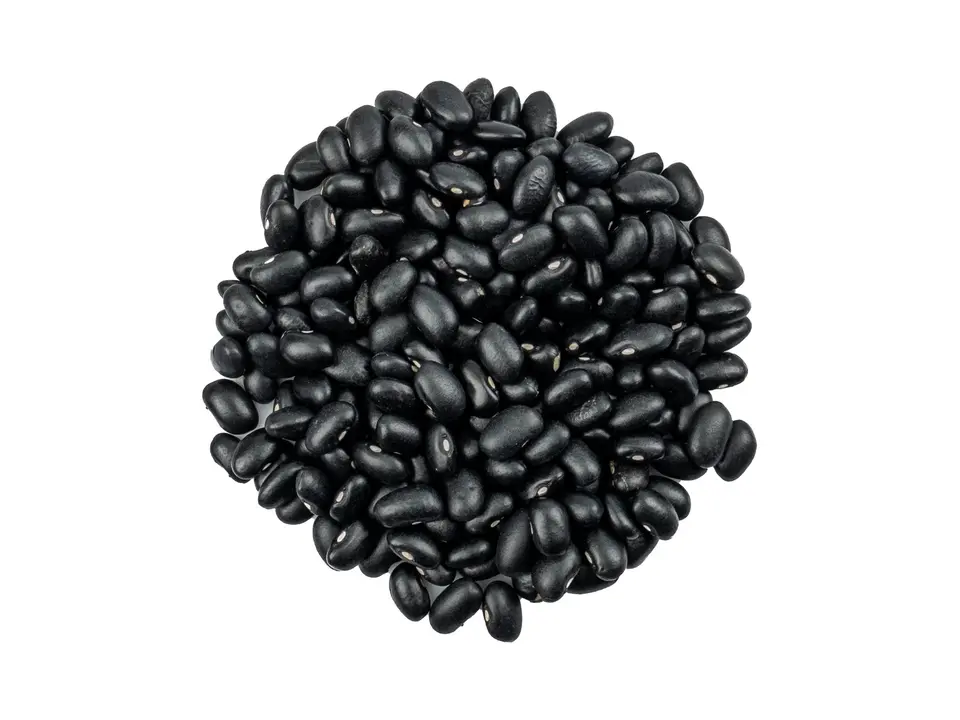 Coming soonGrains and seedsBlack beansSmall black beans that cook creamy inside, for soups and sweets
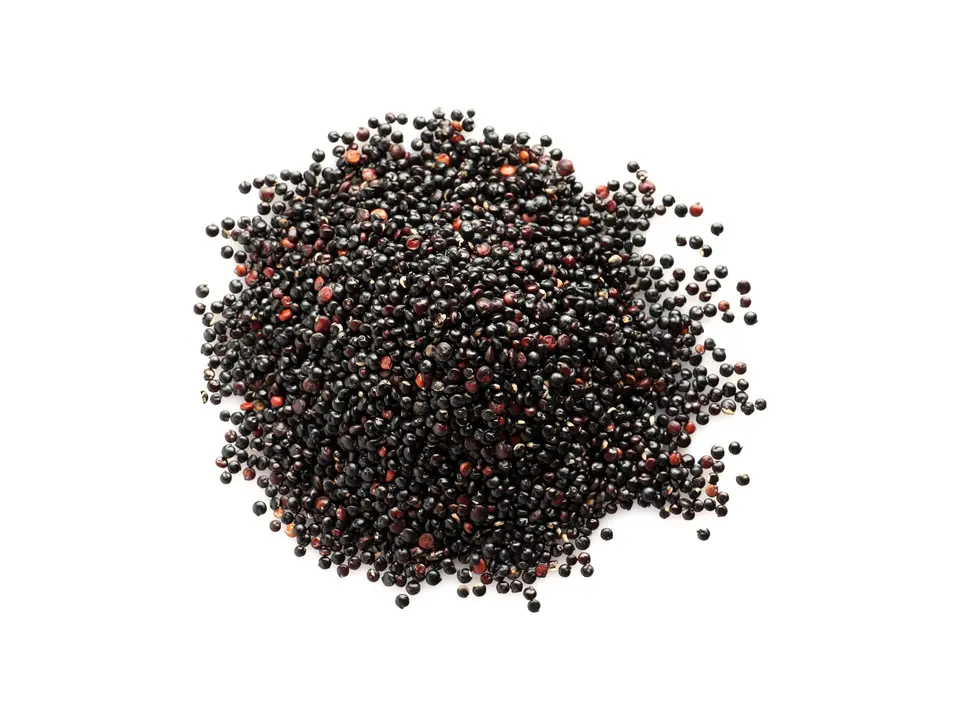 Coming soonGrains and seedsBlack quinoaDark, crunchy quinoa with an earthy taste
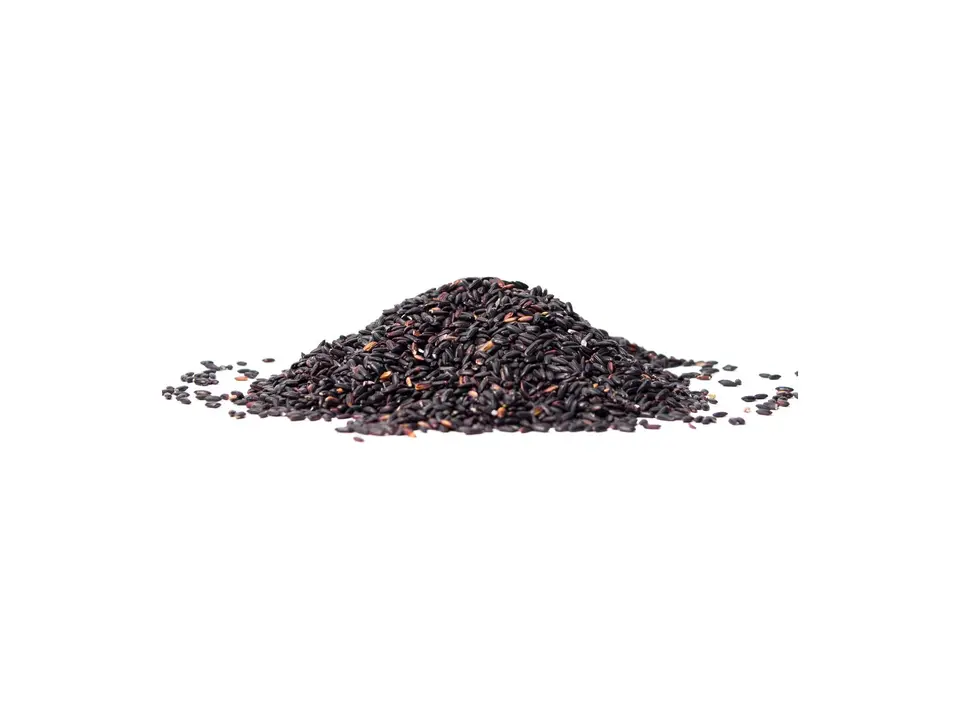 Coming soonGrains and seedsOrganic black sticky riceBlack glutinous rice for coconut desserts and sweet snacks
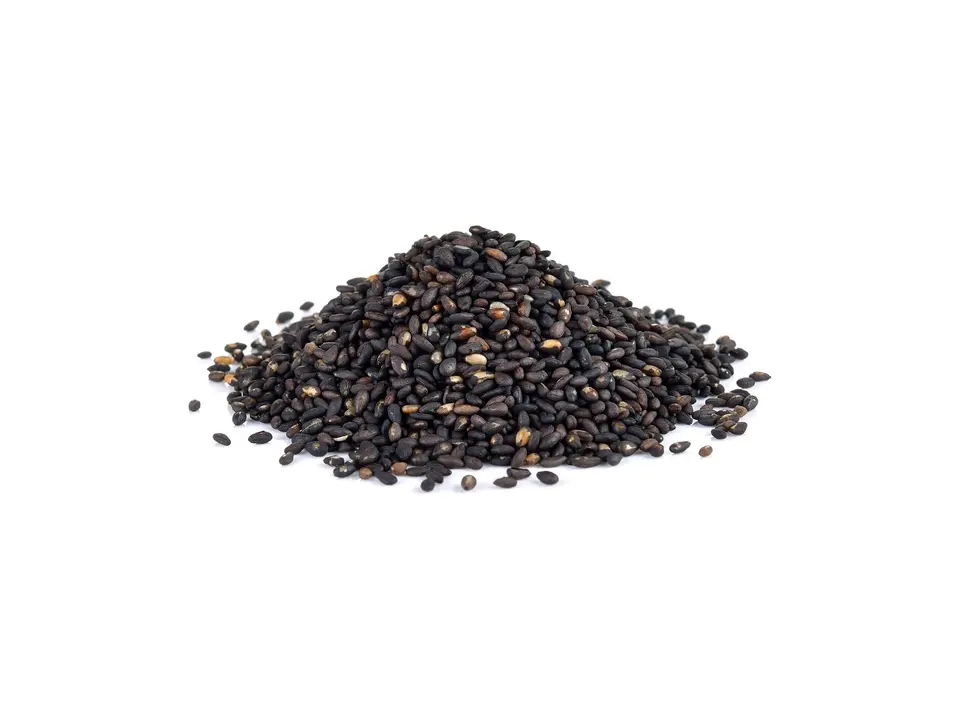 Coming soonGrains and seedsBlack sesameDeep, toasty black sesame for sweets, rice and noodles