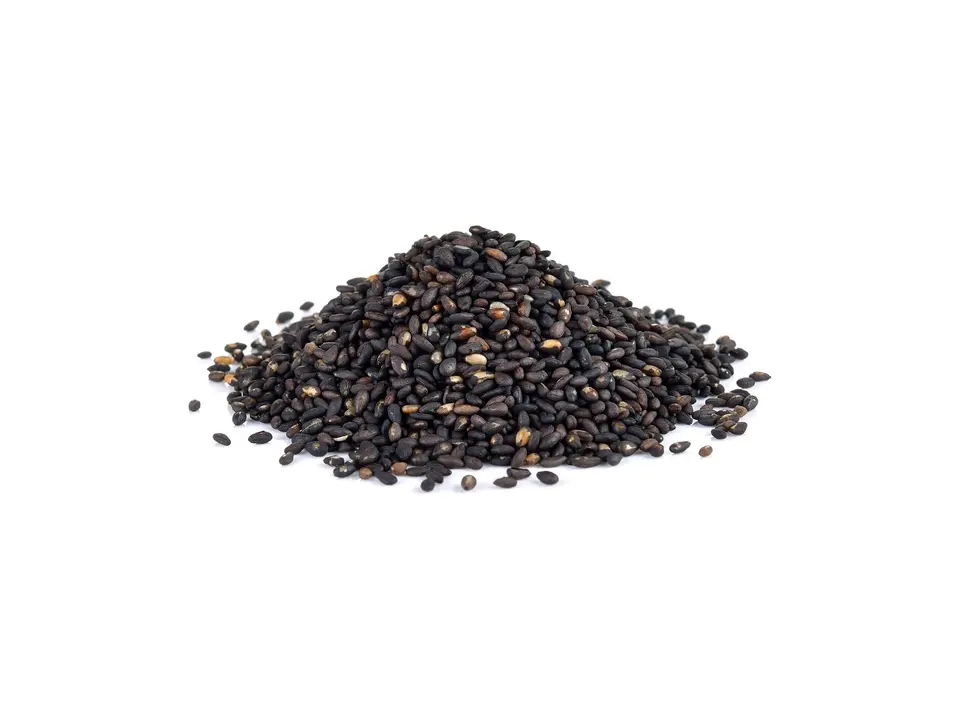
Black sesame.
Deep, toasty black sesame for sweets, rice and noodles
Coming soon
- Storage
- Keep in a cool, dry place in a sealed container, away from sunlight.
- Keeps
- See the best-before date on the pack
- Season
- All year
- Origin
- Shown for each lot
- Organic
- Certificate shown for each lot
Black sesame seeds are small, flat and glossy black, with the seed coat left on. They taste deeper and more roasted than white sesame, with a slight bitter edge that turns pleasant once toasted. Ground, they make a dark grey paste that smells strongly of toasted nuts. In Thai and Chinese kitchens they show up most often in sweets, and a pinch on a plate of pale food makes it look finished.
Ways to use it
- Grind toasted seeds with sugar into a paste and wrap it in glutinous rice dough for sweet dumplings served in warm ginger syrup.
- Stir ground black sesame into warm milk or soy milk, or into a pudding.
- Sprinkle over steamed rice, cold noodles or a cucumber salad.
- Mix with white sesame and press onto tofu or fish before pan frying.
- Make a brittle with palm sugar and toasted seeds.
Toast them in a dry pan over low heat, shaking it often. You can't see black seeds change colour, so go by smell and sound: when they smell nutty and start to pop, take them off the heat and tip them onto a plate. A few seconds too long and they turn bitter.
Storing it
Keep the pack sealed in a cool, dry cupboard away from sunlight and heat. After opening, keep the seeds in a jar with a tight lid. Toasted or ground sesame is best used soon, so make only what you need.
Where it comes from
Grown to certified organic standards. The certificate for each lot is shown when you trace your pack.
Every pack will carry a lot code. Enter it on the Trace your pack page and you will see the farms in that lot, the packing date and the certificate.
What's inside
In 100 g, dry, before cooking
- Energy
- 555 kcal
- Protein
- 19.4 g
- Fibre
- 19.2 g
- Fat
- 46 g
Rich in
- Copper2.2 mg244%
Good for: Helps the immune system and moves iron around the body.
- Calcium913 mg91%
Good for: Needed for normal bones and teeth.
- Phosphorus555 mg79%
Good for: Needed for normal bones and teeth.
- Fibre19.2 g77%
Good for: Helps keep digestion regular.
- Iron15.9 mg72%
Good for: Helps make red blood cells, which carry oxygen.
- Magnesium216 mg70%
Good for: Helps muscles work normally and eases tiredness.
The bar shows how much of a day's need 100 g gives.
Also has
- Vitamin B2 0.61 mg
- Vitamin B1 0.57 mg
- Selenium 23.1 µg
- Vitamin B3 5.3 mg
- Zinc 3.2 mg
- Potassium 401 mg
The % is the share of what a person aged 6 or over needs each day (Thai RDIs, Ministry of Public Health notice No. 445, 2023). The "Good for" line is shown only when 100 g gives 15% or more. Typical values from Thai Food Composition Database, Institute of Nutrition, Mahidol University (Sesame, seeds, black, raw). Each harvest varies a little.
Good to know.
All guidesMore grains and seeds.
See all Coming soonGrains and seedsBlack beansSmall black beans that cook creamy inside, for soups and sweets
 Coming soonGrains and seedsBlack quinoaDark, crunchy quinoa with an earthy taste
 Coming soonGrains and seedsOrganic black sticky riceBlack glutinous rice for coconut desserts and sweet snacks
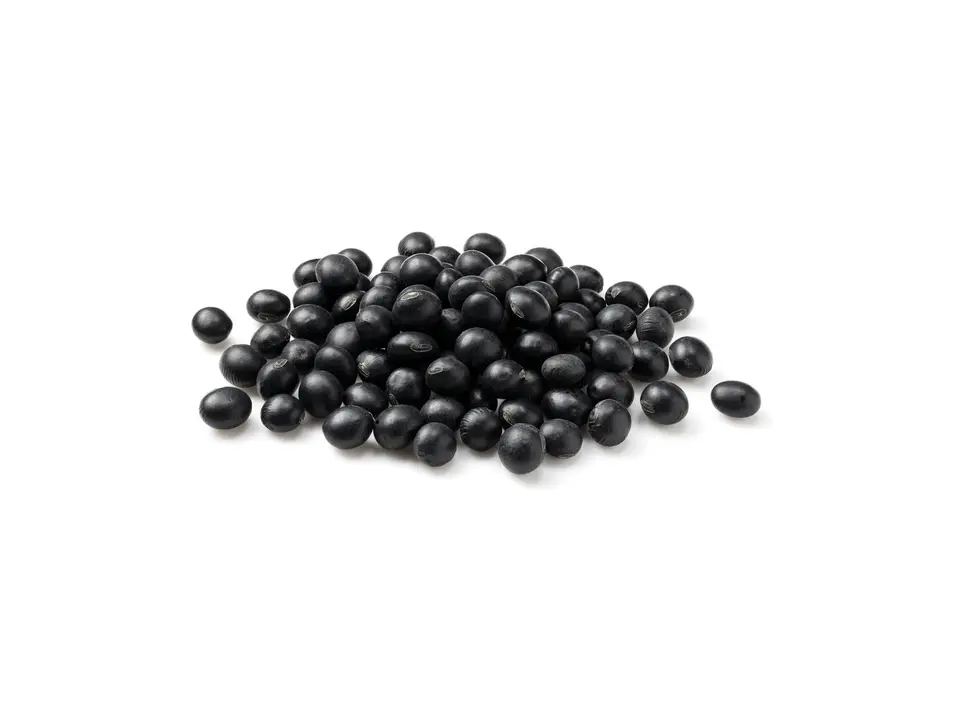 Coming soonGrains and seedsOrganic black soybeansGlossy black beans that cook up firm, sweet and nutty