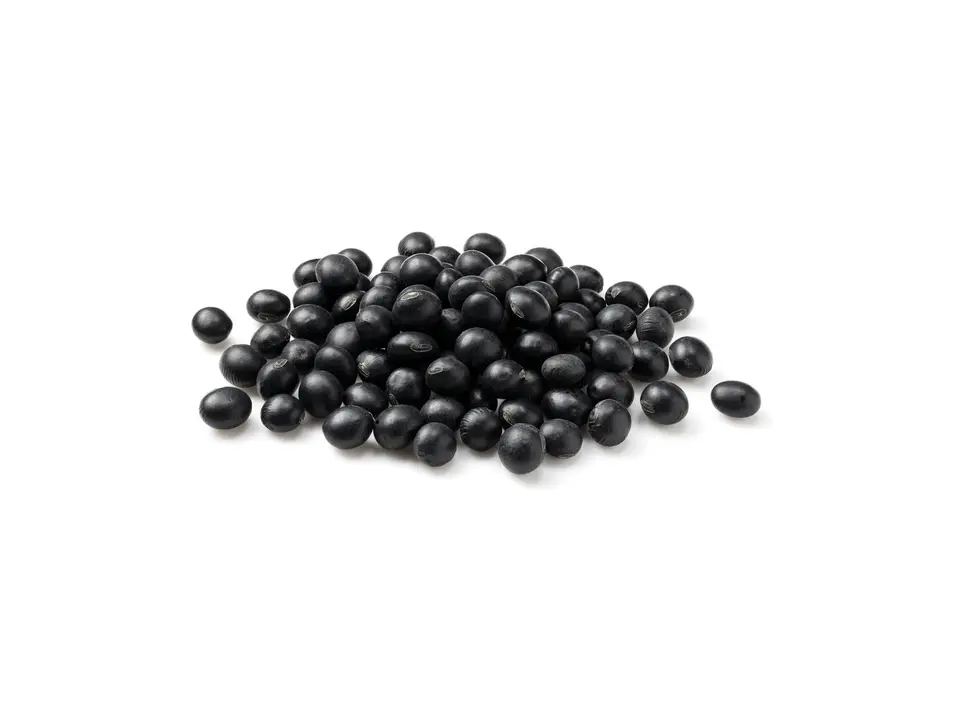
Organic black soybeans.
Glossy black beans that cook up firm, sweet and nutty
Coming soon
- Storage
- Keep in a cool, dry place in a sealed container, away from sunlight.
- Keeps
- See the best-before date on the pack
- Season
- All year
- Origin
- Shown for each lot
- Organic
- Certificate shown for each lot
Black soybeans are the same plant as ordinary soybeans, with a shiny black skin. Split one open and the inside is pale yellow or green. Cooked, they stay firm and taste a little sweeter and nuttier than yellow soybeans, and the skin turns the cooking water a deep purple-black. They are well known in Japanese and Korean home cooking, often simmered sweet or cooked into rice.
Ways to use it
- Simmer soaked beans slowly with sugar and a pinch of salt until soft and glossy, for a sweet side dish.
- Cook a handful together with rice. The rice comes out a soft lilac colour.
- Blend soaked beans with water, strain and boil the liquid for a grey-lilac soy milk.
- Dry-roast the beans in a pan until the skins crack and they smell toasty, then steep them in hot water as a roasted bean drink.
- Add cooked beans to soups, stews and salads, the way you would any firm bean.
Pick over the beans, rinse them, then soak in plenty of water for 8 hours or overnight. Simmer gently in fresh water for a couple of hours, until tender. Keep the heat low so the skins stay on.
Storing it
Unopened, the pack keeps in a cool, dry cupboard out of the sun. Once opened, move the beans into a jar with a tight lid. Cooked beans go into a covered box in the fridge and keep for a few days.
Where it comes from
Grown to certified organic standards. The certificate for each lot is shown when you trace your pack.
Every pack will carry a lot code. Enter it on the Trace your pack page and you will see the farms in that lot, the packing date and the certificate.
What's inside
No figures yet: this food is not in the official food tables (Thai Food Composition Database of Mahidol University, and USDA FoodData Central).
Good to know.
All guidesMore grains and seeds.
See all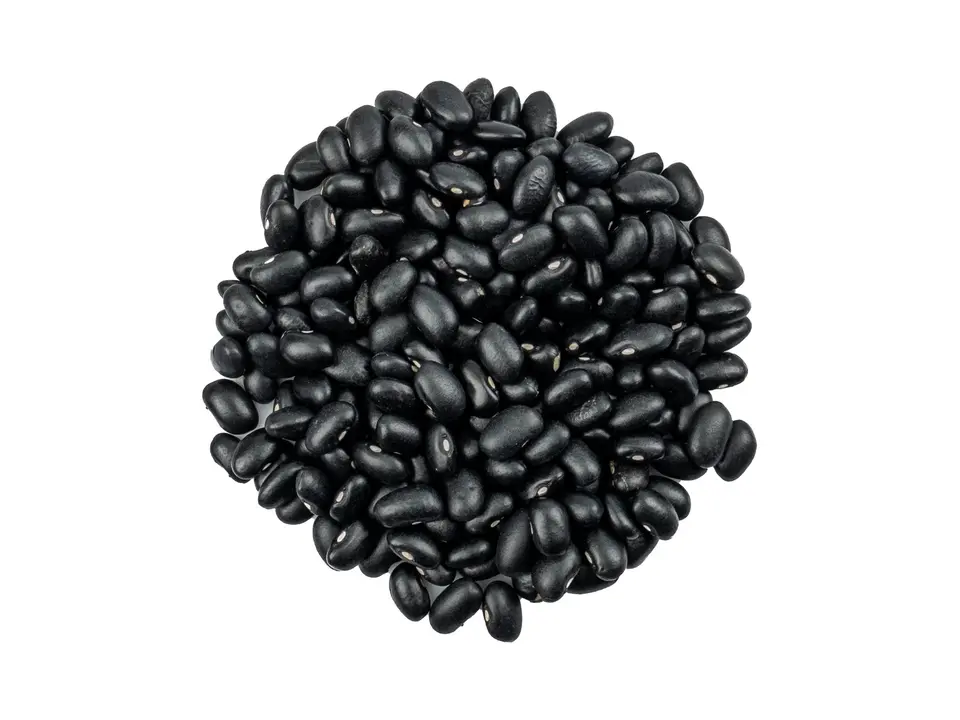 Coming soonGrains and seedsBlack beansSmall black beans that cook creamy inside, for soups and sweets
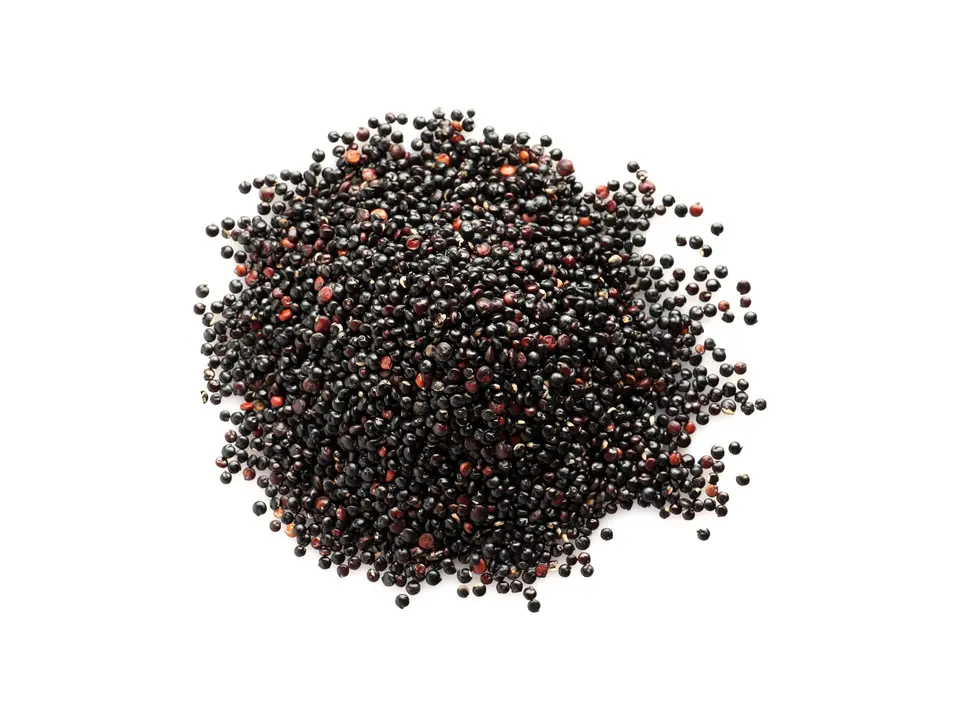 Coming soonGrains and seedsBlack quinoaDark, crunchy quinoa with an earthy taste
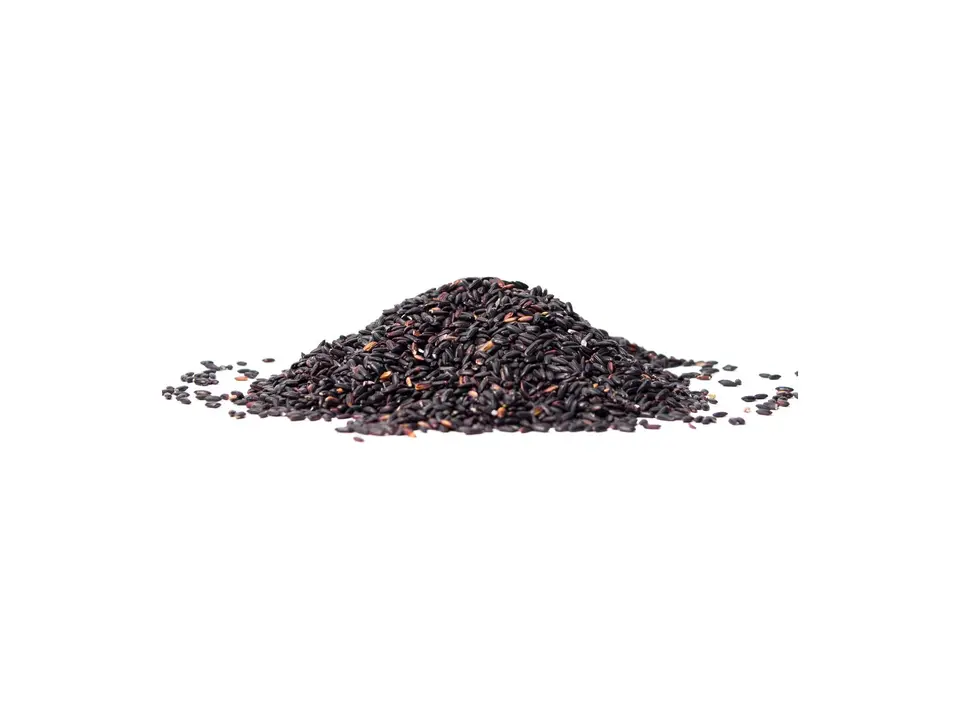 Coming soonGrains and seedsOrganic black sticky riceBlack glutinous rice for coconut desserts and sweet snacks
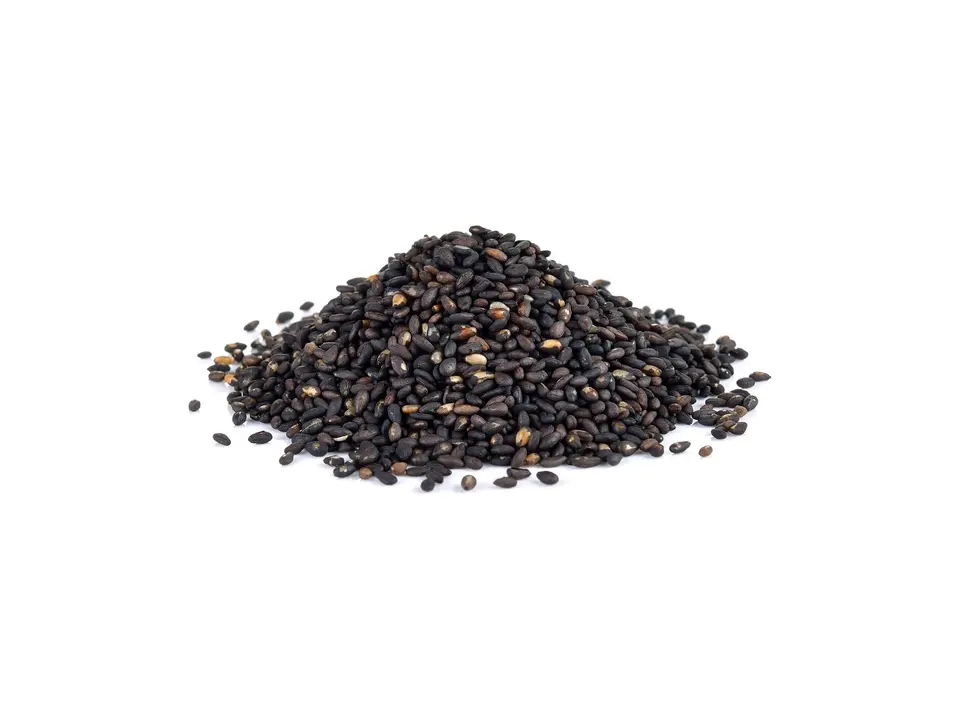 Coming soonGrains and seedsBlack sesameDeep, toasty black sesame for sweets, rice and noodles