Some fruits keep ripening after they are picked, and some do not. Bananas, mangoes, papayas and guavas continue to ripen, so a firm one can be left on the counter. Citrus, pineapple, grapes and watermelon do not, so they must be picked ripe. A gas called ethylene drives the process, and a paper bag is a simple way to keep that gas close to the fruit.
Fruits that keep ripening
Fruits that carry on ripening after harvest are called climacteric. Iowa State University Extension lists these among them:
- apples, pears, peaches, nectarines, apricots and plums
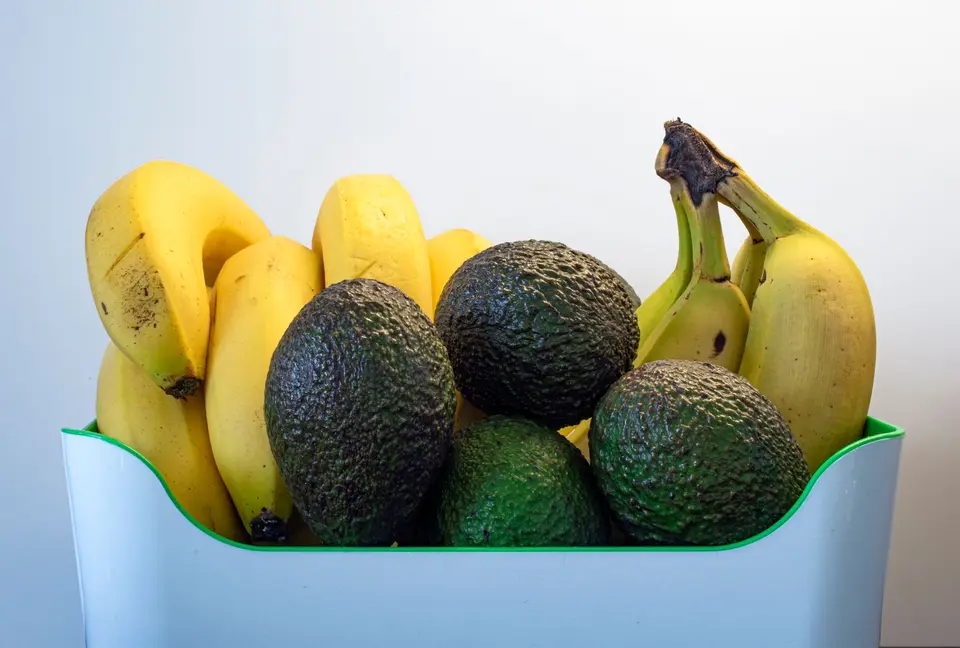
- banana, avocado, mango, papaya, guava, passion fruit and kiwifruit
- cantaloupe and honeydew melon
The same source names fruits that do not ripen after picking. They include citrus such as oranges, lemons, limes and grapefruit, as well as strawberries, raspberries, blackberries, watermelon, grapes, pineapple, pomegranate and cherries. The University of California agrees that grapes, strawberries, pineapple, pomegranate and citrus must be picked ripe.
Iowa State also puts persimmon and plantain on its list of fruits that ripen after picking. Neither source covers every Thai fruit. Durian, longan, rambutan and mangosteen, for example, are not on these lists, so this article makes no claim about them.
The lists are useful in the kitchen. A hard banana or mango that was picked firm can finish ripening at home. A pineapple or a bunch of grapes will not ripen further on the counter, because the sources say these fruits must be picked ripe.
What ethylene does
Ethylene is a hormone, a gas that triggers ripening. Iowa State says climacteric fruits keep releasing high levels of it after harvest. The University of California adds that they are also highly receptive to it. A ripening fruit can therefore speed up the ripening of the fruit beside it.
The paper bag method
Iowa State gives a clear example: a peach ripens faster in a paper bag with a ripe banana. The University of California advises bringing stored fruit to a warmer place and putting it in a bag, or with other ripening climacteric fruit, to hasten the process.
- Keep firm climacteric fruit at room temperature, away from the fridge.
- Put the fruit in a paper bag, with a ripe banana if you want to speed things up.
- Fold the top over loosely and check the fruit often.
- When it is ripe, take it out of the bag.
If you want ripening to slow down, the University of California says to keep ripening fruit away from fruit you are trying to keep from ripening.
Why not start in the fridge
Temperature changes the pace. The University of California notes that most refrigerators are set around 40 °F, about 4 °C. If it is too cold, ripening may never happen, and if it is too warm, the fruit matures quickly.
A Queensland government paper describes how this plays out for tropical fruit. Banana skin shows obvious symptoms after 24 hours at 5 °C, and severe chilling causes failure to ripen. Mango stored below about 13 °C can fail to ripen or ripen unevenly. Papaya below 12 °C is also affected. Iowa State advises letting climacteric fruit ripen at room temperature first and refrigerating it afterwards to extend its life.
In short
- Banana, mango, papaya and guava keep ripening after harvest, while citrus, pineapple, grapes and watermelon do not.
- Ethylene, a gas that ripening fruit release, triggers ripening, and a bag keeps it close to the fruit.
- A peach ripens faster in a paper bag with a ripe banana, according to Iowa State University Extension.
- Ripen fruit at room temperature first, because tropical fruit can fail to ripen if it is chilled too soon.