In Thailand, "ควรบริโภคก่อน" means the food is at its best quality up to that date, if it has been kept as the label says. "หมดอายุ" means the date on which the food's quality ends, again under the stated storage conditions. For both, the law says the food cannot be sold after the date. A date is the maker's estimate for a sealed pack kept correctly. It is not a measurement of one particular pack.
The two phrases in Thai law
The rules sit in Ministry of Public Health notification No. 450 of 2024, which replaced the earlier labelling notification, No. 367 of 2014. It defines the two terms separately.
- ควรบริโภคก่อน (consume before, often called best before) is the date marking the end of the period in which the food has its best quality under the storage conditions stated on the label. After that date the quality may change.
- หมดอายุ (expiry) is the date marking the end of the food's quality under the stated storage conditions.
The notification says that after either date the food cannot be sold. The Thai FDA's own question-and-answer sheet gives an example. If a label says "หมดอายุ 5 กันยายน 2567", the food may not be on sale after that day ends, which means from the first minute of 6 September. The sheet also says the two words may not be swapped, because they have different meanings.
Which word appears depends on the food. The general rule asks for "ควรบริโภคก่อน". Some foods covered by their own notifications, such as food additives, use "หมดอายุ" or "ผลิต" (produced) instead.
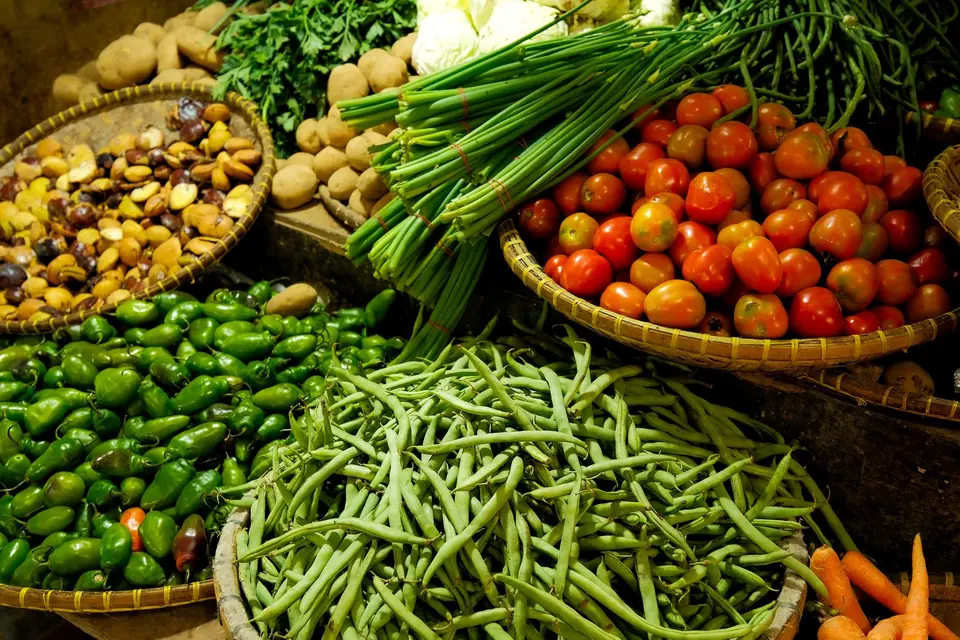
Not every food carries a date. The notification exempts foods that have not been processed, and foods sold by a seller who can give the buyer the information directly, such as a stall. Loose fresh produce may therefore have no printed date.
How a date must be shown
- The date comes with the words "ควรบริโภคก่อน" or "หมดอายุ".
- A food that keeps for up to 90 days shows day, month and year. A food that keeps longer than 90 days may show only the month and year.
- The order is day, month, year, or month, year. The month may be a number or letters. If another order is used, the label must make clear how to read it.
- The year may be Buddhist Era or Christian Era. The Thai FDA lists accepted examples such as "มีนาคม 2568", "03-68" and "03/2568", and a year-first form such as "2025-03" with a note on the order.
- If the date is printed on the bottom or neck of a pack, the label must say where to find it.
- The date has to fall on or after the date the food is sold.
- The words and the date must be the same size. English may be added next to the Thai, but Thai is required.
What a date does not tell you
The Thai FDA states that the maker sets the date after studying how the product keeps in its sale container at set temperatures and times, using physical, chemical, microbiological and sensory tests. So the date is only as good as the conditions it assumes.
- The definitions tie the date to the storage conditions on the label. A pack kept warmer than the label says, or one that has been opened, may be outside what the date describes. A label may also carry a storage instruction, and it belongs with the date.
- "ควรบริโภคก่อน" is about quality. The definition says quality may change after the date, not that a change has happened.
The World Health Organization (WHO) advises not using food beyond its expiry date. The Food and Agriculture Organization (FAO) tells households that there is a big difference between "best before" and "use-by" dates, and that understanding it helps cut food waste. Both words are in use internationally, but the exact meaning is set by each country's law, so the definitions above apply to Thai labels.
In short
- "ควรบริโภคก่อน" marks the end of the best-quality period. "หมดอายุ" marks the end of quality. Both are set under the storage conditions on the label.
- Under Thai rules, food cannot be sold after either date.
- Foods that keep longer than 90 days may show only the month and year.
- The maker sets the date after shelf-life testing, so it assumes the stated storage conditions.
- Unprocessed foods and foods sold face to face may carry no date.
Sources
- Notification of the Ministry of Public Health No. 450 B.E. 2567 (2024), Labeling of Prepackaged Foods, English translation (Thai FDA)
- Questions and answers on the labelling notification for prepackaged foods (Thai FDA)
- Training slides on Notification No. 450 (Thai FDA)
- 15 quick tips for reducing food waste and becoming a Food hero (FAO)
- Prevention of Foodborne Disease, The Five Keys to Safer Food (WHO)