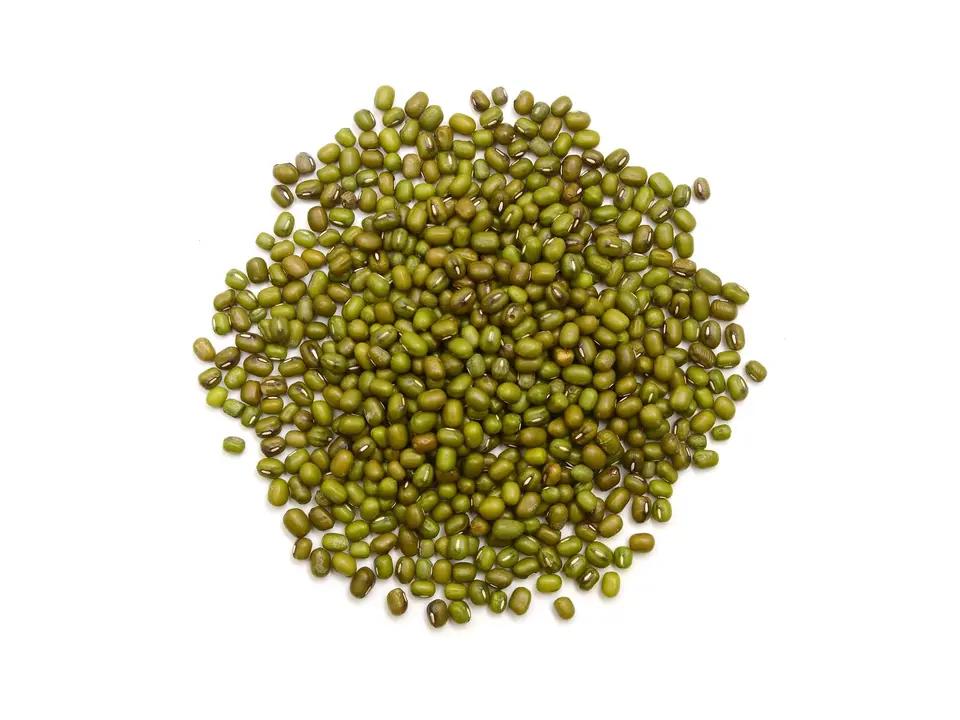
Mung beans.
Small green beans for sweet soups, congee and sprouting
Coming soon
- Storage
- Keep in a cool, dry place in a sealed container, away from sunlight.
- Keeps
- See the best-before date on the pack
- Season
- All year
- Origin
- Shown for each lot
- Organic
- Certificate shown for each lot
Mung beans are small, round, olive-green beans with a pale inside. In Thai kitchens they turn up everywhere: simmered with sugar as thua khiao tom nam tan, cooked into congee, ground into the flour for sweets, and sprouted into the bean sprouts on a plate of pad thai. Cooked whole, they go soft and creamy with a mild, earthy, slightly sweet taste, and the skins split open as they finish.
Ways to use it
- Simmer with water until soft, then sweeten with sugar for a warm or iced dessert soup.
- Cook a handful with rice into a soft congee, or add to plain rice porridge.
- Soak overnight, drain, and keep damp in a covered bowl, rinsing twice a day, until short sprouts appear.
- Simmer with garlic, ginger, onion and a little curry powder for a thick, savoury bean stew.
- Mash cooked beans with sugar and coconut milk as a filling for steamed buns or sweets.
Mung beans cook faster than most beans. Rinse them, soak for a few hours if you have time, then simmer in plenty of water for about 30 to 45 minutes until they break open and squash easily.
Storing it
Keep the sealed pack in a cool, dry cupboard out of the sun. Once opened, keep the beans in a jar with a tight lid. Cooked beans go into the fridge once they have cooled.
Where it comes from
Grown to certified organic standards. The certificate for each lot is shown when you trace your pack.
Every pack will carry a lot code. Enter it on the Trace your pack page and you will see the farms in that lot, the packing date and the certificate.
What's inside
In 100 g, dry, before cooking
- Energy
- 302 kcal
- Protein
- 23 g
- Fibre
- 26.1 g
- Fat
- 1.6 g
Rich in
- Copper1.5 mg163%
Good for: Helps the immune system and moves iron around the body.
- Fibre26.1 g104%
Good for: Helps keep digestion regular.
- Vitamin B10.79 mg66%
Good for: Helps turn food into energy.
- Phosphorus357 mg51%
Good for: Needed for normal bones and teeth.
- Protein23 g46%
Good for: Helps build and keep muscle.
- Magnesium108 mg35%
Good for: Helps muscles work normally and eases tiredness.
The bar shows how much of a day's need 100 g gives.
Also has
- Iron 7 mg
- Zinc 2.9 mg
- Selenium 12.5 µg
- Vitamin B2 0.23 mg
- Vitamin B3 2.5 mg
- Calcium 87 mg
The % is the share of what a person aged 6 or over needs each day (Thai RDIs, Ministry of Public Health notice No. 445, 2023). The "Good for" line is shown only when 100 g gives 15% or more. Typical values from Thai Food Composition Database, Institute of Nutrition, Mahidol University (Mungbean, mature seeds, dried, raw). Each harvest varies a little.
Good to know.
All guidesMore grains and seeds.
See all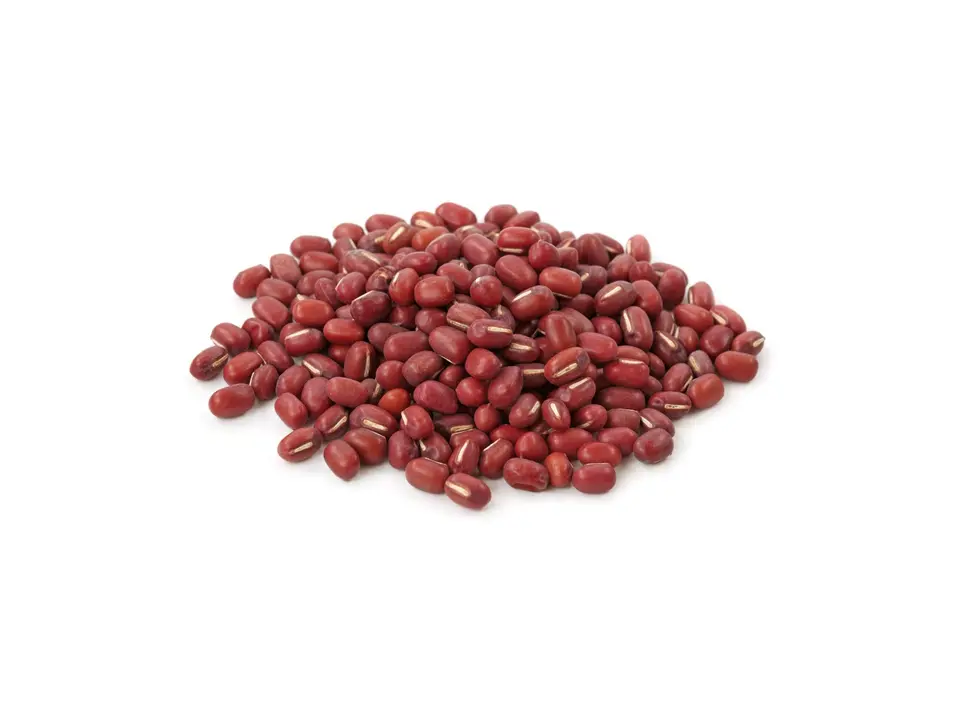 Coming soonGrains and seedsOrganic adzuki beansSmall red beans that cook soft and a little floury
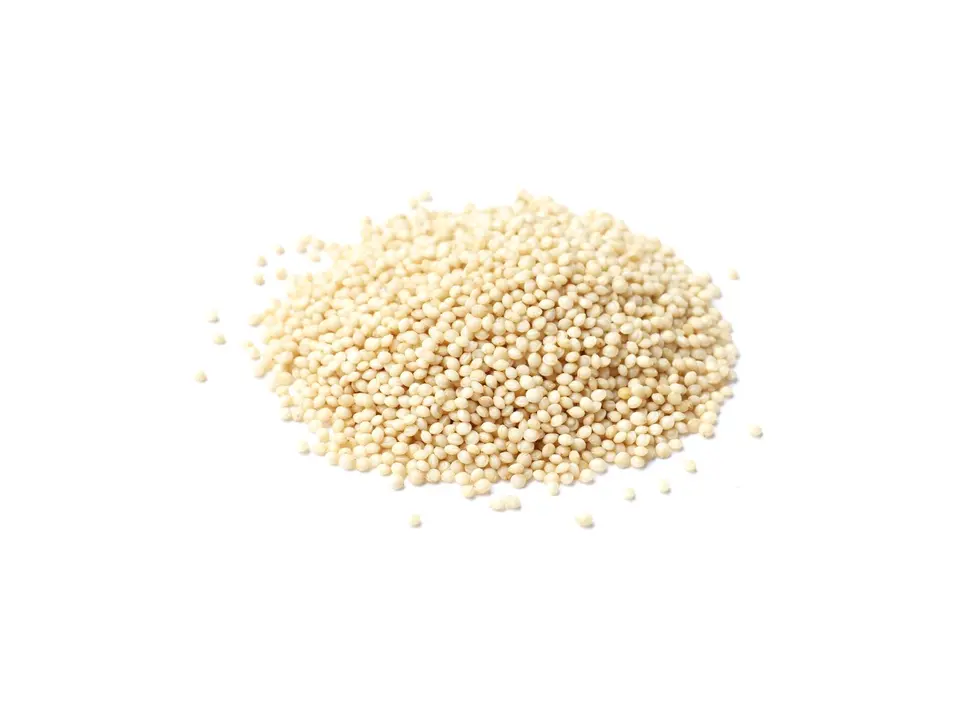 Coming soonGrains and seedsAmaranthTiny seeds that cook into a soft porridge or pop like corn
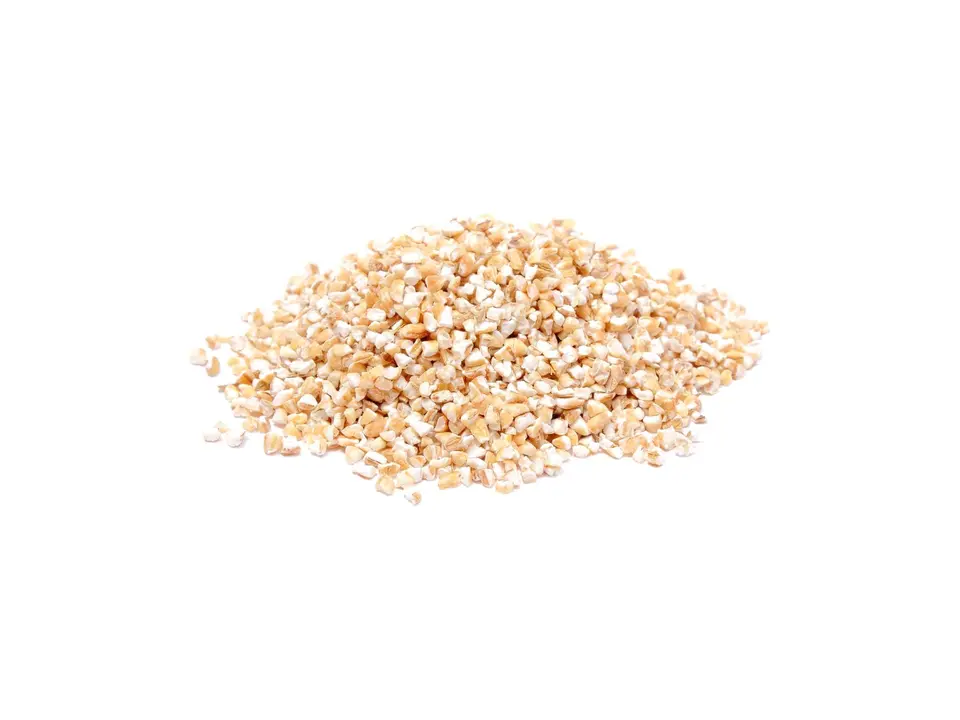 Coming soonGrains and seedsBarleyPlump, chewy grains for soup, salads and barley water
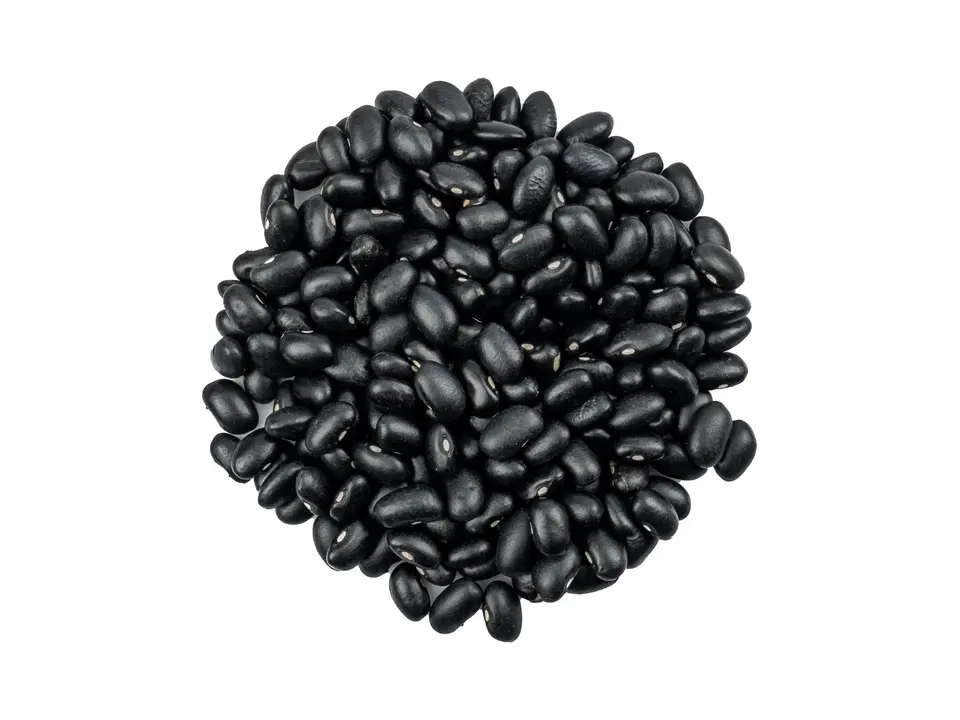 Coming soonGrains and seedsBlack beansSmall black beans that cook creamy inside, for soups and sweets